Edward Law Quotes
The insult of 800 years is at last avenged. The gates of the temple of Somnauth, so long the memorial of your humiliation, are become the proudest record of your national glory... You will yourselves, with all honor, transmit the gates of sandal-wood, through your respective territories, to the restored Temple of Somnauth
The Somnauth Temple was one of the holiest of Hindu shrines in India. It had been attacked, looted, and destroyed several times since its erection before the birth of Christ. A Northern Warlord Ruler had raided the temple and stolen the spectacular gates at the tomb. When the British Indian Army of Indians led by British officers and NCOs, conquered the Warlord area, Lord Ellenborough had the huge gates removed and returned to the Somnauth Temple issuing this proclamation which he arranged to have approved by Queen Victoria and have Parliament vote to return the gates. It was a brilliant historical instance of symbols having enormous political effect. Hindus throughout India, most of whom had forgotten about the stolen temple gates, had the British to thank for righting one of the great wrongs of Hindu history.
Edward Law, 1790–1871, 1st Earl of Ellenborough, President of the British Board of Control, Governor-General of India, Proclamation, 1842
Sourced by: Eigen's Political and Historical Quotations

Expressing distress that the British were involved in one war after another in the Middle East that she thought never would have occurred if Britain had a foreign policy instead of "Muddling Through". Bell was responsible for setting most of the borders and geographical distributions of peoples in the Middle East, She did the best she could without any strong policy to guide her. A Century later, the Middle Eastern nations were still fighting over those borders, but they remained essentially intact.

A very passionate minority of India’s Muslims demanded a separate Islamic State (that would become Pakistan) but Hindu’s and Muslims were mixed throughout India and many Indians and British were concerned that there would be a bloodbath if the plans for independence went forward. When the decision had been made to partition India, Radcliffe had the unenviable task of deciding where the boundary was to be between Pakistan and India. No one on either side was satisfied with his effort. So, realizing that violence was about to break out, he packed quickly and went back to England. Over two million Indians were killed in the violence that broke out in the next weeks as there was a huge migration and ethnic cleansing to implement Radcliffe’s boundaries. Fifty years later, both India and Pakistan acknowledge that Radcliffe did a very reasonable job.


The British wanted to turn over control of India to Nehru's Congress Party and make India independent. However, there had been sectarian rioting and murder between Muslims and all the other religions of India—Hindus, Sikhs, Buddhists, and Christians. Wavell was not confident that Nehru and Congress could control the situation and huge massacres would result. Gandhi, who normally did everything to avoid violence, this time placed Indian independence first and demanded continuation of the complete transition process including the police and military powers. This is one of the very few occasions on which non-violence was not pre-eminent for Gandhi.

This is an example of the politicization of history. Late in the first millinium Islamic warriors invaded and conquered much of Hindu India. The Muguls controlled much of India for hundreds of years. When the English conquered India, the Muslims rejected Western education and legal systems while the Hindus did not. After several generations the Hindus, better educated, and more sophisticated in Western ways took advantage of the numerical majority and regained control under the British. With Independence, Islamic nationalists insisted upon partition of the country creating a Muslim country, Pakistan. Millions of Indians were murdered in internecine attacks during the partition. Subsequently, Muslim historians have written one version of the history of India, while Hindu historians have written another. They appear to come from different planets or parallel universes. British historians have a third universe.


This was written more than a year before the American Revolution Battles began. It took time to ship the men and supplies to America and the British did not handle that task with much efficiency. See {636926} for another of the King’s statements.

The profits that England made on the North American Colonies and the Caribbean were very large. 10 years before the American Revolution most sophisticated English politicians realized that and one of the reasons the British fought so hard to keep America from Independence was that money.


He always appeared in a military uniform after that.


After the King’s appointment in 1921 she “advised” him on establishing this regime and operating the government. At a time that women could not even vote in England, Bell was a kingmaker and major power in an area of the world that was much more sexist than England at the time.

Fremont led his troops into the Mexican territory of California without permission. When he was ordered out (see related quote), he refused and ordered his men to the top of a small mountain, constructed a makeshift fort on Hawk’s Peak, and raised an American Flag at the summit. Fremont wanted California for America, and he was apparently prepared to precipitate an Alamo type situation where his band would be wiped out, and the United States, to avenge the massacre and in the process, take California. He thought better of the idea however, and after 3 days retired before any shots were fired. However, the next few years saw the United States virtually take over California.
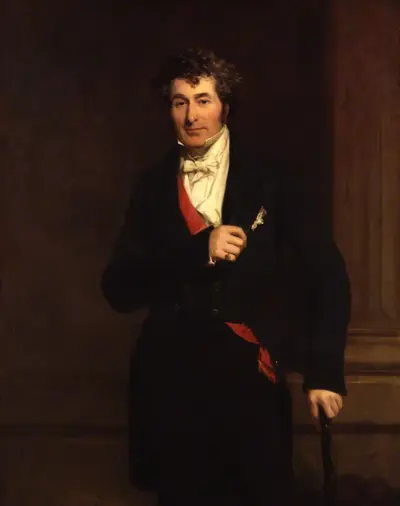
Edward Law, 1st Earl of Ellenborough, GCB, PC, was a British Tory politician. He was four times President of the Board of Control and also served as Governor-General of India between 1842 and 1844.
