NAPOLEON BONAPARTE
(Napoleon I)


Napoleon recognized that technology and science were major factors in innovation and economic development and that mathematics was necessary for that and for economics, and therefore placed a great deal of emphasis on mathematics education. He was a fairly competent mathematically himself having been an artillery officer early in his career.
Leaders of nations for years only trusted as truly patriotic those man—usually nobles of the aristocracy—who owned land. If an invader came and seized their land, they would lose their wealth. However money is fungible, and a banker can easily move his money abroad and join another nation or side in a war. If the country is ruined by war, the manufacturer cannot obtain labor or raw materials, The financier depends on none of these and so hs not the vested interest in the welfare of the nation.
Independent verification has so far failed.
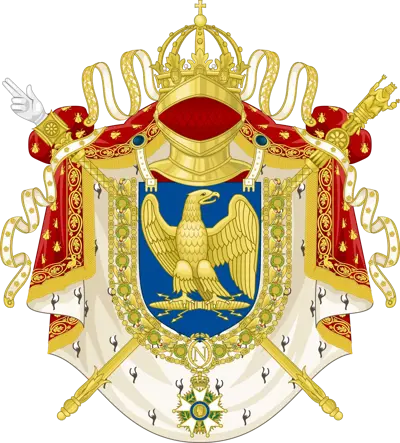
Napoléon Bonaparte was a French military and political leader of Corsican descent. He rose to prominence during the French Revolution and led several successful campaigns during the Revolutionary Wars. As Napoleon I, he was Emperor of the French from 1804 until 1814, and again in 1815. Napoleon dominated European and global affairs for more than a decade while leading France against a series of coalitions in the Napoleonic Wars. He won most of these wars and the vast majority of his battles, building a large empire that ruled over continental Europe before its final collapse in 1815. One of the greatest commanders in history, his wars and campaigns are studied at military schools worldwide. He remains one of the most celebrated and controversial political figures in human history.
