Napoleon Bonaparte Quotes
If they want peace, nations should avoid the pin-pricks that precede cannon shots.
Bonaparte, Napoleon. The Mind of Napoleon: A Selection from His Written and Spoken Words. Edited by J. Christopher Herold, Columbia University Press, 1955, p. 165.


At that time there were extensive meetings and discussions for the creation of what was to be the United Nations. The negative view of the United Nations or other international security organization is now and always has been held by a vocal minority in the United States.

Theodore Roosevelt was the Presidential nominee. Johnson was a leader of some members of Congress some of whom were extreme isolationists and some of whom were Nazi sympathizers and Hitler admirers. When the Japanese attacked Pearl Harbor later that year, Germany, fulfilling its treaty with Japan, declared war on America, Johnson’s group no longer mattered. Before WWII most Republicans were opposed to Defense Spending and accused the Democrats of being war hawks. After WWII, they flip flopped and became more hawkish than the Democrats who they accused of being soft on defense for years thereafter. See {631380} for President Roosevelt’s different view.

While it is true that thus far in human history war has been the only way, that does not necessarily mean that that is the only way. The establishment of free trade used to be only accomplished by force or arms or fear of such, but in modern times, common markets and trading zones are being created for economic and domestic desires for economic development. Even most non democratic countries have wanted to create a larger market for its goods and services and have joined larger organizations irrespective of military defeat and its fear. See {553984} for perspective and hope relating to this quotation.


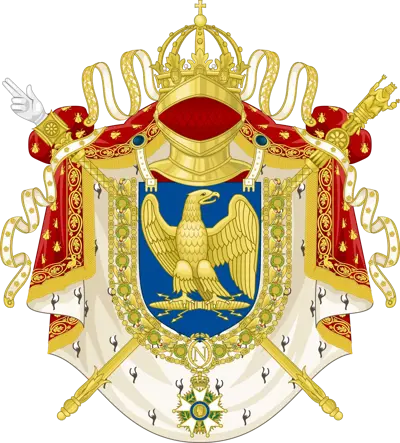
Napoléon Bonaparte was a French military and political leader of Corsican descent. He rose to prominence during the French Revolution and led several successful campaigns during the Revolutionary Wars. As Napoleon I, he was Emperor of the French from 1804 until 1814, and again in 1815. Napoleon dominated European and global affairs for more than a decade while leading France against a series of coalitions in the Napoleonic Wars. He won most of these wars and the vast majority of his battles, building a large empire that ruled over continental Europe before its final collapse in 1815. One of the greatest commanders in history, his wars and campaigns are studied at military schools worldwide. He remains one of the most celebrated and controversial political figures in human history.
