James F. Byrnes Quotes
I hope that the German people will never again make the mistake of believing that because the American people are peace-loving, they will sit back hoping for peace if any nation uses force or the threat of force to acquire dominion over other peoples and other governments.
Byrnes, James F. "Restatement of Policy on Germany." Department of State Bulletin, vol. 15, no. 376, 15 Sept. 1946, pp. 496-501.


Despite the fact that there were no formal political polls at the time, public opinion was very influential in curtailing what might be a tendency to use of the American military. Starting with the Cold War later, Presidents tended to use American military force regardless of public opinion or would exaggerate or lie (Vietnam and Iraq wars for example) to temporally gain some public support.


Theodore Roosevelt was the Presidential nominee. Johnson was a leader of some members of Congress some of whom were extreme isolationists and some of whom were Nazi sympathizers and Hitler admirers. When the Japanese attacked Pearl Harbor later that year, Germany, fulfilling its treaty with Japan, declared war on America, Johnson’s group no longer mattered. Before WWII most Republicans were opposed to Defense Spending and accused the Democrats of being war hawks. After WWII, they flip flopped and became more hawkish than the Democrats who they accused of being soft on defense for years thereafter. See {631380} for President Roosevelt’s different view.


See Benedict Spinosa for an earlier absense or war view. Also, JFK more recently.

The highest court in New York.


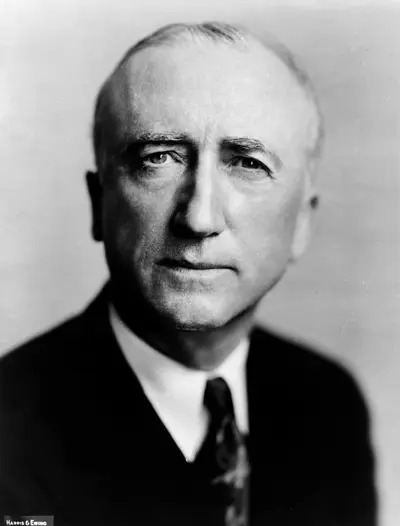
James Francis Byrnes was an American judge and politician from the state of South Carolina. A member of the Democratic Party, Byrnes served in Congress, the executive branch, and on the United States Supreme Court. He was also the 104th governor of South Carolina, making him one of the very few politicians to have served in the highest levels of all three branches of the American federal government while also being active in state government.
