Napoleon Bonaparte Quotes
The Turks can be killed, but they can never be conquered.

The Ottoman Turks had conquered much of Europe, as far even as Vienna. Ataturk although an incredible reformer for democracy, religious freedom, and gender equality, felt that critical to Turkey’s independence and ability of engage in radical reform depended on the World and European and Turkish perception that Turkey was the equal of any European nation and had ruled most at one point.


Southern intellectuals at the beginning of the Civil War were convinced of their invincibility. They misjudged both the effect of the industrial and technological might and the moral intensity of the North.


The Turks could not take the city then, but they did 56 years later in 1453.

The Ottoman Turks had already conquered the Eastern Roman empire outside of Byzantium. They had overwhelming superiority and it was just a matter of time when they would take the city. Surrender would have been the sensible course, but religious passion against surrendering the holy city capital of Christendom to the Muslims was dominant in the Emperor and some of the leadership. But the morale of most was very low—and for good reason. The Ottomans soon captured the city.

Talaat Pasha was one of the Young Turks who ran the Turkish Government of which Talaat was the Minister of Interior and one of the ruling trumverate. The Christian Armenians, a minority in Turkey and its lands, were discriminated against like other non Muslim minorities in the Ottoman Empire. But during the Turkish War with Russia and WWI, some Armenians defected and served on the Russian side. Many Turkish citizens took revenge on Armenians by means of murder and torture. Soon, the extermination of the Armenians became the official “Young Turk” government policy. Hundreds of thousands of Armenians were killed outright, and about an equal number were “deported” to special areas. Many died of malnutrition along the forced march of Ethnic Cleansing. Others were murdered as they were deported. No one knows exactly how many Armenians were killed with estimates ranging from ½ million to 4 million. This was the first genocide of the 20th century. Modern Turkish leaders however, are in denial about the Armenian deaths. They claim that there was a war and food was scarce; the only Armenians killed, the claimed were proven Russian agents. They further claim that the Armenian behavior was in large part responsible for the forced deportations because of their lack of patriotism and unwillingness to help the Turkish authorities identify the Russian agents. Most Turks today are unaware of the Armenian Genocide as nothing is taught about the massacres in schools or other institutions. It is against the law in Turkey to even have an intellectual study of the Turkish behavior towards the Armenians, much less publish anything about it. The Christian Armenians, a minority in Turkey and its lands, were discriminated against like other non Muslim minorities in the Ottoman Empire. But during the Turkish War with Russia and WWI, some Armenians defected and served on the Russian side. Many Turkish citizens took revenge on Armenians by means of murder and torture. Soon, the extermination of the Armenians became the official “Young Turk” government policy. Hundreds of thousands of Armenians were killed outright, and about an equal number were “deported” to special areas. Many died of malnutrition along the forced march of Ethnic Cleansing. Others were murdered as they were deported. No one knows exactly how many Armenians were killed with estimates ranging from ½ million to 4 million. This was the first genocide of the 20th century. Modern Turkish leaders however, are in denial about the Armenian deaths. They claim that there was a war and food was scarce; the only Armenians killed, the claimed were proven Russian agents. They further claim that the Armenian behavior was in large part responsible for the forced deportations because of their lack of patriotism and unwillingness to help the Turkish authorities identify the Russian agents. Most Turks today are unaware of the Armenian Genocide as nothing is taught about the massacres in schools or other institutions. It is against the law in Turkey to even have an intellectual study of the Turkish behavior towards the Armenians, much less publish anything about it.

The Sultan of Turkey had just committed the Empire to a jihad against Britain in support of Germany in WWI: 1st Earl of Oxford
Ataturk wrote this manual personally. Religious Turks took violent offense to Ataturk’s proclamation that Turks were great without Islam.

This quotation illustrated the extreme polarization between the current fundamentalist Muslims, and the Muslim modernists and the West. Kamal Ataturk, the great leader and stateman who is the father of modern Turkey, is castigated by the author for leading the new Turkish parliament to depose the Caliph – the civil and religious autocrat, one of whom reigned from after the death of Muhammad till his abolishment in 1924. Most of the rest of the world credits Ataturk with being one of the great leaders of all time—one who led a democratic revolution which transformed Turkey into the only Muslim secular democracy, requiring pubic secular European type education for all children, giving women the right to vote (before the U. S. even), adopting a European alphabet and dress, and outlook on life—creating most remarkably a total cultural revolution with virtually no loss of life. No revolutionary leader, before or since has led so extensive a political and cultural revolution, and it was a bloodless revolution. Turkey, into the 21st century, was by far the most powerful, industrialized, scientific and modern nation of Muslims in the world and others were far behind. Yet many Islamic theologian still castigate Atatork for his great achievements as being against the will of God.


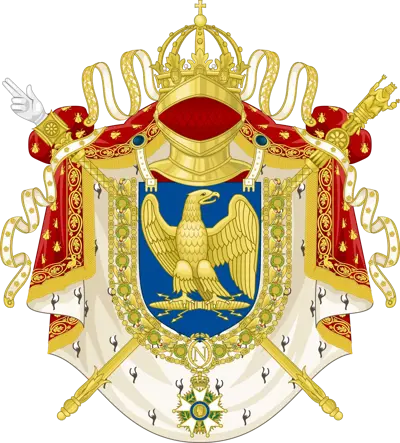
Napoléon Bonaparte was a French military and political leader of Corsican descent. He rose to prominence during the French Revolution and led several successful campaigns during the Revolutionary Wars. As Napoleon I, he was Emperor of the French from 1804 until 1814, and again in 1815. Napoleon dominated European and global affairs for more than a decade while leading France against a series of coalitions in the Napoleonic Wars. He won most of these wars and the vast majority of his battles, building a large empire that ruled over continental Europe before its final collapse in 1815. One of the greatest commanders in history, his wars and campaigns are studied at military schools worldwide. He remains one of the most celebrated and controversial political figures in human history.
