William Cobbett Quotes
The truth is that the fall of Napoleon is the hardest blow that our taxing system ever felt. It is now impossible to make people believe that immense fleets and armies are necessary.
The prerogative of preparedness weakens after a war is won; everyone expects some sort of peace dividend.
William Cobbett, 1763-1835, British Journalist & Editor, Member of Parliament, Quoted in Military Quotes/Quotations
Sourced by: Eigen's Political and Historical Quotations

A negotiated end to the war made sense for both sides. The English budget was in terrible shape with the huge costs of dealing with Napoleon and although Liverpool wanted to teach the Americans a lesson, he could not get the money to finance it. The Americans could prevent British conquest but they could not defeat the British overall or eject them from the continent.

Roosevelt was very candid with the American people that there would be high cost to war and sacrifice would be needed. See {584569} for other similar candor. This quotation was often used by critics of George W. Bush who initiated the Iraq War and then cut taxes for the rich, but then financed the war through the budgetary emergency appropriations bypassing the budget rules that the revenue must be specified to pay for it. His administration even claimed at an early stage in the war that the oil revenue from Iraq oil would defray the costs.

Wilson was very candid that there would be high cost to war and sacrifice would be needed. See {584570} for other similar candor. This quotation was often used by critics of George W. Bush who initiated the Iraq War and then cut taxes for the rich, but then financed the war through the budgetary emergency appropriations bypassing the budget rules that the revenue must be specified to pay for it. His administration even claimed at an early stage in the war that the oil revenue from Iraq oil would defray the costs.


The Dutch King’s brother, Emperor Napoleon Bonaparte Bonaparte, insisted on Dutch contributions to his war effort in the way of Dutch troops, ships and provisions. Yet there was not enough possible revenue to pay for such a war effort. Gogel was able to introduce efficiencies in many areas but still more taxes were needed. War expenditures took all the resources of the state and progress stopped and the kingdom was almost destroyed by the economic crisis.


To a great extent, the same is true in our modern world.


1st Earl Baldwin of Bewdley. Baldwin has been castigated since WWII for being part of the “appeasement group” in England. As Prime Minister in 1935 he would not face the threat of Fascism, Germany and the Nazis and did not initiate a major arms buildup. Churchill, among others, never forgave him. See {626930} for Churchill’s view of Baldwin.


This is an excellent historical quotations showing how our government financed the Spanish American War. Wars have always placed economic stress on the nations which wage then. In the American Revolution we borrowed from individuals and from France. After that all our wars were financed by a combination of war bond sales, other borrowing, and tax increases—all except the George W, Bush Afghanistan and Iraq Wars which were not funded thus complicating an economic crises caused by Bush’s Great Recession. While some critics saw Bush’s actions as reprehensible and irresponsible—it was the only time in American history where tax rates were cut in wartime, Bush’s team had a plan. They had an ideological point of view that said that major tax cuts would spur the economy and lead to MORE government revenue as a result of the growth that would come. However, in this case there not only was no growth, but there was the worst recession in American History. But there was a plan to finance the war—it just went awry.

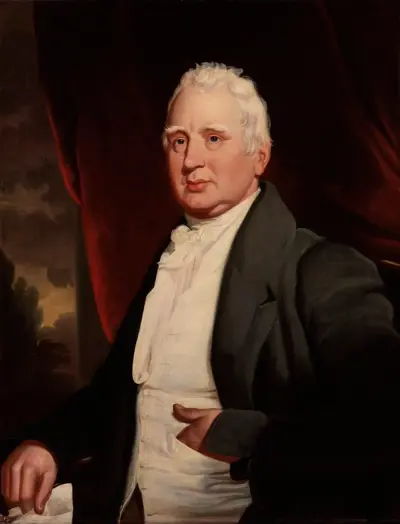
William Cobbett was an English pamphleteer, journalist, Member of Parliament and farmer born in Farnham, Surrey, one of a popular agrarian faction seeking to reform Parliament, abolish "rotten boroughs", restrain wanton foreign activity and increase wages, to promote domestic peace and ease poverty among farm labourers and smallholders. He backed lower taxes, saving, reversing enclosures of commons and resisting the gold standard of 1821. He sought an end to borough-mongers, sinecurists and "tax-eaters" (overpaid and corrupt bureaucrats, public servants and stockbrokers), and dismissed British Jews in a typecast by the same token. Early in life he was a soldier and devotee of king and country, but later pushed for a radicalism that helped to produce the Reform Act 1832 and gain him one of two seats in Parliament for the newly enfranchised borough of Oldham. He urged Catholic emancipation. He saw British agriculture and other economic output geographically. His polemics cover subjects from political reform to religion. His best known book is Rural Rides (1830, still in print). He argued against Malthusianism that economic betterment could support global population growth.
