Edward Gibbon Quotes
The Battle of Poitiers was an encounter which would change the history of the world.
The battle was historic because in September 1356 English The Black Prince's great victory over the French King John in Western France was critical in the 100 Years War.
Edward Gibbon, 1737-1794, English Historian, Quoted in David Levering Lewis, God’s Crucible, 2008
Sourced by: Eigen's Political and Historical Quotations


William the Conqueror. Harold II was chosen as king of England after the death of Edward the Confessor, however, his claim was disputed by Duke William of Normandy

Ataturk was a young major at the time commanding troops of a weak and corrupt Ottoman regime. However a combined English and French (the strongest military powers in Europe) invasion of the Gallipoli Peninsula threatened to capture the Turkish capital, Constantinople. Ataturk alone rallied the Turkish defenders and fought the invaders to a standoff in long drawn out battle with huge casualties on both sides. Ataturk became a national hero. Although Ataturk thereafter was very reluctant to use military force or endanger troops, the thing he always thought worth the supreme sacrifice (including his own) was the independence and sovereignty of the nation. See {584502} for his continuing belief in this type of sacrifice.

She referred to herself and others referred to her as “The Maid of Orleans” and she wrote of herself in the third person.


This required much of the population to maintain and bear arms. Another part of the law required the arms-bearers to be at the service of the king and as such was the king's militia.


The Germans and Americans did this as a standard practice. The French “history” to which the General referred did not involve machine guns and mortars. The entrenching tool (shovel) was a fundamentally important piece of equipment to the Germans and Americans but not the French at the beginning of WWI. Later in the war, the French finally learned.

1st Duke of Wellington


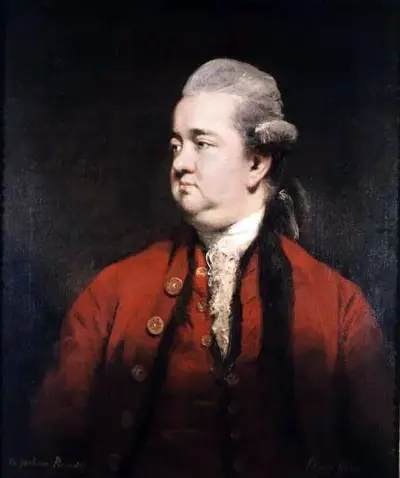
Edward Gibbon FRS was an English historian, writer and Member of Parliament. His most important work, The History of the Decline and Fall of the Roman Empire, was published in six volumes between 1776 and 1788 and is known for the quality and irony of its prose, its use of primary sources, and its polemical criticism of organised religion.
