Max Hastings Quotes
The Allied cause [in WWII] was morally compromised by the need to enlist the service of Joseph Stalin’s tyranny in order to defeat the forces of Adolf Hitler, Benito Mussolini, and Hideki Tojo.
The Russian troops, killed more Germans and liberated more territory than the rest of the Allies together. They also suffered many more casualties than the rest of the Allies.
Max Hastings, British Historian & Writer “The Spoils of War: The Horrors and Hopes of 1945”, Foreign Affairs, November – December 2013
Sourced by: Eigen's Political and Historical Quotations


Donovan had been criticized for utilizing "leftists" for intelligence activities. Precursor to CIA. Donavan was a prominant attorney, banker and financier as well as a Medal of Honor Winner when he was asked to organzie the OSS. America was far behind the axis and even our allies in spy craft. J Edgar Hoover focused the FBI on leftists and had veritually no capability for spying in Western Europe and Asia. Donavan's OSS produced almost all of the actionable intelligence and did a wonderful job in organziaing covert operations. He used people who would normally never be considered by an espionage agency including many scholars, intellectuals, scientists, and entertainers. His agents ranged from Julia Child, the gourmet chef. to Moe Berg, a New York Yankee Baseball Player who spoke many languages. Hoover and some if the military intelligence agencies were jealous of his success and his access to President Roosevelt, and complained about anything they could find and hisi agents were an easy target for their wealth, societal connections, sexual indescretions, liberal politics, Bohemians, upper class right wing politics and culture. None of thus phased Donavan. After the war and FDR's death, Donavan's enemies got the OSS disbanded. Soon, something was needed, and the CIA was organized along the lines of Donavan's recommendations.


This fact was one of the reasons that McCarthyism and HUAC were able to get traction. The Red Scare paranoids found something to really worry about. They overreacted, sensing the problem not as one of a large number of misguided and naïve people trying to help America do better, but as active spies controlled by the Kremlin who wanted to destroy the American way of life. There were two basic reasons these naïve officials acted that way. Many of them had not forgotten the devastation of the American people in the Great Depression and believed that capitalism had almost failed completely and the rough edge had to be taken off American capitalism by injecting some socialist principles such as stronger labor unions, ending racial and religious discrimination, controlling monopolies, and regulating critical industries. They also were mindful of the fact that the Russians were bearing the brunt of the WWII casualties—military and civilian—while killing more of the Germans and capturing more German occupied territory than the other allies together, yet they were not receiving the same level of assistance—technical, intelligence, economic and political as the British. They saw helping the Russians as saving American lives on the battlefield by making them more effective and keeping German soldiers and weapons away from the Western front and Americans. They also remembered that many in Congress were opposed to our entering WWII in Europe until Germany declared war on America. They had in many cases been apologists for Fascism and passionate enemies of communism. Some American industrialists like Henry Ford were anti-Semitic and overt admirers of Hitler. {586985} So these officials tried to redress the imbalance that existed while at the same time little was really known about Soviet Russia and the Stalin excesses that were as bad as some of Hitler’s. {634969} The only information Americans had were the terrible casualties the Russians were taking and the in kind that they were dishing out to the Germans. The number of Soviet spies in America were few and commensurate with the number of agents we had in Russia. But few Americans realized the difficulty the U. S. and the rest of the democratic world would have with Russia after the war was won.


Russia suffered enormous casualties in WWII where over 20 million Russians were killed. None the less, at the end of the war Europe was devastated with no viable economy. The fascist states and the democracies were all devastated. But Russia was still functioning. Instead of crediting the enormous Russian land mass, the success of the Russian Army, and the enormous amount of aid that the U. S. had provided, Stalin concluded that the reason was the Soviet Communist System.

Coughlin was a great admirer of Adolf Hitler and Benito Mussolini and the Fascists. He was one of the American “heroes” in Nazi Germany, receiving assistance from the Nazi government. Between his anti-Semitism and support for Hitler, Fascism and radical socialism, the Vatican ordered him off the air and shut down his political demagoguery.


A little over a decade later the struggle began.

FDR was right about Russia being a major factor in stopping Hitler, but partially wrong about the danger of Russia. The Soviets never did dominate Europe although the tried, but they did dominate Eastern Europe.


Mussolini allied with Hitler. Ciano turned out to be right.

Seeger had joined the Young Communist League as a young boy, and was a supporter of Joseph Stalin until all the information about Stalin was made public by Russian Premier Nikita Khrushchev. Seeger, along with other Stalin apologists throughout the world realized that the criticisms of Russian Communism under Stalin were not just right wing propaganda.

This was a very important quotation in that Sartre was a very influential liberal philosopher and when he condemned Russian communism, many other liberals opposed communism, and those who had already felt vindicated in their decision.

The Scientific Project that developed the Atomic Bomb. He was a strong advocate for disarmament and that was being debated at the United Nations. He was critical of Bernard Baruch’s tactics but it soon was clear to almost all that the Russians were not interested in a serious UN supervised disarmament. Oppenheimer was profoundly disappointed when it was clear that disarmament was being blocked by the Russians and their veto. After that he didn’t trust the Russians, and concentrated on trying have US policies that would not goad the Russians into an arms race. This quotation is particularly important because in an effort to discredit his views on nuclear policy some politicians accused him of being a security risk with the innuendo that he was a communist and even a Russian agent.

Helms was then a young agent of the Office of Strategic Services (OSS) in Berlin.


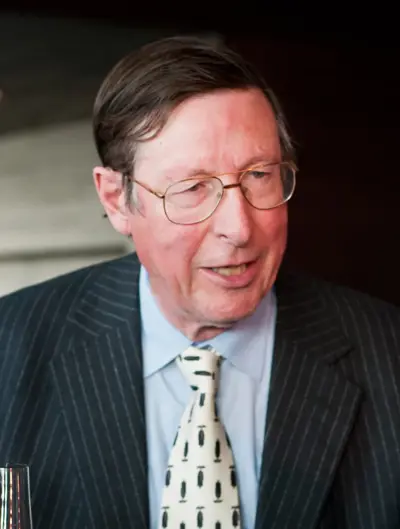
Sir Max Hugh Macdonald Hastings FRSL FRHistS is a British journalist and military historian, who has worked as a foreign correspondent for the BBC, editor-in-chief of The Daily Telegraph, and editor of the Evening Standard. He is also the author of numerous books, chiefly on defence matters, which have won several major awards. Hastings currently writes a bimonthly column for Bloomberg Opinion.
