Hezekiah Niles Quotes
Shall we open the door to what may become the foulest proscription: state against state?
He was a Southerner who was opposed to Slavery. He understood both North and South and feared the Civil War 20 years before the event. See also his letter {615642}.
Hezekiah Niles, 1777-1839, Editor and Publisher of Niles’ Weekly Register, Editorial, November 4, 1820
Sourced by: Eigen's Political and Historical Quotations

Niles shared with his close friend his great fear of a Civil War between South and North. He published in Baltimore (Maryland then being a slave state) and saw the slavery issue as leading the nation to national conflict three decades before it actually happened. As a distinguished Southerner he was respected and influential in the North where his Register was widely circulated. He himself however opposed slavery, and this made many of his attempts to prevent civil war ineffective as the more rabid Southerners saw anyone opposed to slavery as an enemy. See his editorial warning about the Civil War: {615640}.


King George did not want to give up the American Colonies and claimed the loss at Yorktown was just a loss of a single battle. The English soldiers had controlled New York, Charlestown and other places and American Tories wanted to fighting to continue. The French were having major problems elsewhere and the states were all broke from the war effort. Hamilton urged Clinton to offer all the New York offers and soldiers half pay tp be available to fight against the other ex-colonies represented in the Continental Congress.


the modern believe is that democracies are not prone to war, especially against other democracies. Seward, and some others believe that democracies can be pushed into war by politicians you do so for partisan political advantage. Politicians often have to show how tough they are.

1st Earl of Kingston. Foreign Minister at this time. This decision was a terrible blow to the South who had been trying desperately to obtain diplomatic recognition for the Confederacy from England and other world powers.


He was contrasting this with the Supreme Court decision in Bush v. Gore, where by 5 to 4, the Supreme Court made George W. Bush President. Bryer wrote a dissent and the majority of Americans wanted Gore. Yet, the people of America accepted the unpopular decision with which the majority disagreed. The alternative is settling such disputes in the streets with violence. So Bryer strongly advocates the upholding of Supreme Court decisions, even if unpopular and even if wrong as he felt Bush v. Gore was.

There were more than 100 million of his gun distributed over the world and his invention has been the instrument by which more people have been killed than any other weapon.
When the first Southern States seceded, each appointed a whose job it was to persuade the other Southern States to also secede. In this case Hale was marketing secession to Kentucky which with Maryland were the only two Southern States to reject what they regarded as treason and rebellion. The importance of the quotation however is in his argument which was all based on enmity to racial equality and abolition. Later Southern apologists would argue that the Civil War was fought, not about slavery and racism butt about different philosophies of government. See {623715} .

Jackson makes the case against the South Carolina argument for nullification. In the related quote, he makes his threat which was very successful in ending the notion of “nullification”. The extensive quotation is given as it summarizes the entire issue that was one of the crises of early America.

After the Presidential years of James Buchanan who protected the South from slavery reform and abolition as the North was gaining political power and the abolitionists were having a greater and greater effect on public opinion in the North. While Southerners did not believe Lincoln would emancipate the slaves, they realized that the majority of the growing nation was opposed to slavery, and more and more Northern states were passimg laws making any slave who sets foot in the State a free person. Slaves coud not only have more reason to run away, but slave owners would not be able to get their “property” back. Lincoln would not help the South as Buchanan did, and the Southerners realized that over time, slavery would no longer be feasible or profitable. Cobb, very experienced at Washington politics, realized the changes that would come and thought that they would be “certain and speedy.” The irony was that if the South had not seceded and simply dragged its feet legislatively, it would have taken two or three decades for slavery to end. However, by seceding and initially fighting so hard and well while poor Union generals were in command, Lincoln was forced to try more drastic measures and issued the Emancipation Proclamation after only a few years. The Civil War and seccession was not only a tactical and strategic error for the South, but rapidly brought about just what the Southerners were fighting to prevent.

The Governor was a staunch Confederate supporter but his state legislature majority favored the Union. He was forced out of the governorship when the 1861 election gave the legislature a veto-proof pro Union majority.

After the attack on Fort Sumter, the South Sent “diplomats” to negotiation with the Government. Unfortunately for all, the South really was not open to negotiations as they only had two predetermined positions they would agree to: The first was that the Government should guarantee the perpetual right of states to have slavery if they wished and that fugitive slaves would be returned by the non-slave states. The second was that the Union should recognize the Confederacy as an independent nation and have peaceful relations between the two. The first was impossible to deliver even if the Union would agree to continue slavery, there was no way that the Federal Government could enforce the return of fugitive slaves from many northern states where they were free the second they set foot in the state, and the Northern states demanded States Rights and not being forced to return Fugitive Slaves forcing the Southern States to oppose States Rights when it came to Fugitive Slaves while favoring it for slavery itself. The Federal government could not enforce the Dred Scott Decision under the pro-South Buchanan administration. And Lincoln and most of the Northern Politicians would not accept a complete dissolution of the Union. There are no other possibilities the South would accept and there was really nothing to negotiate.


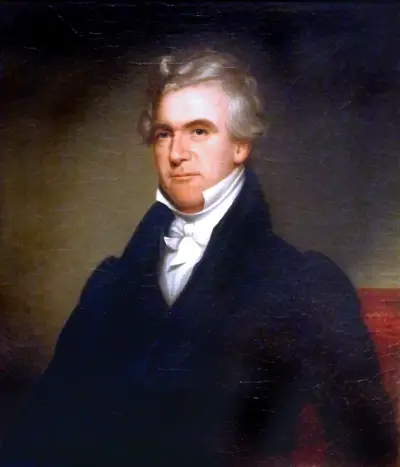
- Born: October 10, 1777
- Died: April 2, 1839
- Nationality:
- Profession: Journalist, Editor, Publisher
Hezekiah Niles, was an American editor and publisher of the Baltimore-based national weekly news magazine, Niles' Weekly Register (aka Niles' Register) and the Weekly Register.
