John Russell Quotes
The United Kingdom will not take a position on the recognition of the Confederacy until the fortunes of arms or the more peaceful mode of recognition shall have more clearly determined the respective positions of the two belligerents.
1st Earl of Kingston. Foreign Minister at this time. This decision was a terrible blow to the South who had been trying desperately to obtain diplomatic recognition for the Confederacy from England and other world powers.
John Russell, 1792-1878, British Prime Minister, (Whig), Statement regarding the recognition of the Confederacy as an independent nation during the Civil War, August 24, 1861
Sourced by: Eigen's Political and Historical Quotations

After the attack on Fort Sumter, the South Sent “diplomats” to negotiation with the Government. Unfortunately for all, the South really was not open to negotiations as they only had two predetermined positions they would agree to: The first was that the Government should guarantee the perpetual right of states to have slavery if they wished and that fugitive slaves would be returned by the non-slave states. The second was that the Union should recognize the Confederacy as an independent nation and have peaceful relations between the two. The first was impossible to deliver even if the Union would agree to continue slavery, there was no way that the Federal Government could enforce the return of fugitive slaves from many northern states where they were free the second they set foot in the state, and the Northern states demanded States Rights and not being forced to return Fugitive Slaves forcing the Southern States to oppose States Rights when it came to Fugitive Slaves while favoring it for slavery itself. The Federal government could not enforce the Dred Scott Decision under the pro-South Buchanan administration. And Lincoln and most of the Northern Politicians would not accept a complete dissolution of the Union. There are no other possibilities the South would accept and there was really nothing to negotiate.

Queen Victoria

There was some fear in the North that the shots fired by the Southern rebels, might encourage one or more of the European Powers to start a war with the United States. And if the Rebellion turned into a full scale Civil War, the South would surely encourage such acts be promising trade concessions in the export of Southern cotton. Seward’s confident and bellicose statement distressed some Union colleagues who feared that Seward might anger and provoke one of more of the machismo and nationalistic European Powers. However, if Seward was bluffing, the bluff worked. No country encroached on American interests during the Civil War. If he was not bluffing, he certainly, along with many others, understated the difficulty that the North would have putting down the Southern rebellion.

Germany had demanded that Belgium allow German troops to cross Belgium to the French frontier. However, King Albert was concerned that this would be a de facto German occupation of Belgium and asked for help. The British tried diplomacy but things were out of anyone’s control and the First World War ensued.

He himself became a victim of the Civil War when Oliver Cromwell ordered him beheaded in 1658

14 years after this statesmanlike speech, Davis flip flopped on this principle and became a firebrand and agitator and hawk for secession and war. It was the Southern upper class that controlled the politics of the South and were the ones who would suffer the greatest economic loss if the Union had continued in the direction of refusing to return runaway slaves and other abolitionist activity. Although many Southerners volunteered to fight for the confederacy, there were not enough and Davis, who in earlier years would not war unless there was genuine demand of the people, for the Civil War, the South had to resort to conscription. The North did as well.


Charles Wilkes, a Union Navy Captain enforcing the naval blockade of the South, intercepted a British mail ship in the Caribbean and discovered two Confederate diplomats on board. He took them into custody to the cheers of Congress. England, however, was outraged that passengers—diplomats—on one of their ships was seized after boarding. This was technically an act of war. Abraham Lincoln, to the distress of many in Congress ordered the Confederate diplomats released explaining with this quotation.


More new technology was deployed in the Civil War than any other war in history and Moltke did not realize that the classic European military tactics were obsoleted. However, neither did most of the Southern Generals and many of the Union Generals. Lincoln, Grant and Sherman were the ones who developed strategies and tactics to function in the new world of warfare.

He was contrasting this with the Supreme Court decision in Bush v. Gore, where by 5 to 4, the Supreme Court made George W. Bush President. Bryer wrote a dissent and the majority of Americans wanted Gore. Yet, the people of America accepted the unpopular decision with which the majority disagreed. The alternative is settling such disputes in the streets with violence. So Bryer strongly advocates the upholding of Supreme Court decisions, even if unpopular and even if wrong as he felt Bush v. Gore was.

The economic advantage of the North over the South in the Civil War is well known. Not so well-known is the huge technological advantage that the North had. This quotation gives an indication of the extreme difference. The North fought the war on all fronts including the technological one where no weapons and methodologies from the telegraph to the military railroad were critical. The South by contrast did not have the manpower to fight the war and keep industry and scientific technological development going also.

This article was published under the name of “A Lover Of Peace” but is generally attributed to Paine. He was publishing in Pennsylvania which had a large Quaker, pacifist population and Paine was urging them to consider being armed.

The early Union military leadership was so poor and timid that it was not clearly demonstrated that a Confederacy was not viable until later in the war, and the Southerners possessed an extraordinary capacity for ignoring reality and self-delusion, that it was not demonstrated until Grant’s major victories and Sherman’s March through Georgia and the Southern East Coast that an independent South was not going to be.

He was Chancellor of the Exchequer at the time of this speech. Gladstone was certain about most of his views on foreign policy but correct on only some with many blunders on his watch. This view was very important for the Confederacy as it was a prerequisite to diplomatic recognition. The latter never came.

What makes this quotation important is that the Central Intelligence Agency disobeyed the order and implemented a number of covert operations in Indonesia and CIA Director Alan Dulles did not tell the President. See {634612} for his rationale.

The “proofs” were diplomatic assurances—treaties—that England would guarantee the territorial integrity of Belgium. The British made strong diplomatic efforts to persuade Germany not to occupy Belgium. The German’s none the less send armies in under the excuse that if they did not, the French would occupy the country and have a strategic advantage over them. Diplomacy could do no more good. England had to send troops or renege on its obligations. So England was in WWI.

Although Great Britain had abolished slavery, British economic interests during the Civil War suffered because of the northern blockade of the South. Much political opinion in England was hostile to the blockade policies of the Union. Bright, a great admirer and supporter of the United Sates and the Union cause was concerned that the United States might drift into War with Great Britain. His letter to Senator Sumner was written with the understanding that it would be in shared with President Lincoln, and it was actually read at a cabinet meeting.
Although Great Britain had abolished slavery, British economic interests during the Civil War suffered because of the northern blockade of the South. Much political opinion in England was hostile to the blockade policies of the Union. Bright, a great admirer and supporter of the United Sates and the Union cause was concerned that the United States might drift into War with Great Britain. His letter to Senator Sumner was written with the understanding that it would be in shared with President Lincoln, and it was actually read at a cabinet meeting.

While to Madison the principle that “war is better than tribute” was “settled policy”, there were many who disagreed. See {640867} as an example.
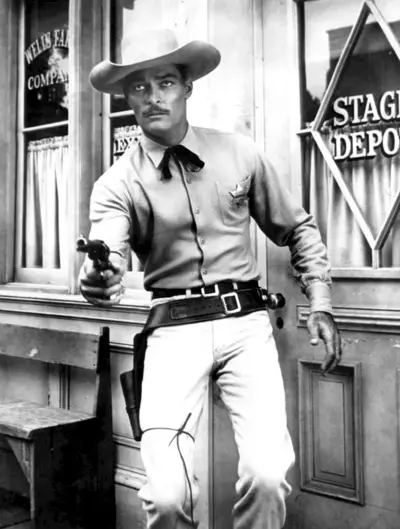
John Lawrence Russell was an American motion picture film and television actor, most noted for his starring role as Marshal Dan Troop in the ABC western television series Lawman from 1958 to 1962 and his lead role as international adventurer Tim Kelly in the syndicated TV series Soldiers of Fortune from 1955 to 1957.
