William H. Seward Quotes
If any European Power provokes a war, we shall not shrink from it. A contest between Great Britain and the United States would wrap the world in fire.
There was some fear in the North that the shots fired by the Southern rebels, might encourage one or more of the European Powers to start a war with the United States. And if the Rebellion turned into a full scale Civil War, the South would surely encourage such acts be promising trade concessions in the export of Southern cotton. Seward’s confident and bellicose statement distressed some Union colleagues who feared that Seward might anger and provoke one of more of the machismo and nationalistic European Powers. However, if Seward was bluffing, the bluff worked. No country encroached on American interests during the Civil War. If he was not bluffing, he certainly, along with many others, understated the difficulty that the North would have putting down the Southern rebellion.
William H. Seward, 1801-1872, Governor of New York (Whig), U.S. Senator (Whig & Republican, NY), U. S. Secretary of State, Statement to William Howard Ruddell, war correspondent for the Times of London, 1860
Sourced by: Eigen's Political and Historical Quotations

1st Viscount Grey of Fallodon. The pace of change in the world has been accelerating ever since the enlightenment. Even at the beginning of the 20th century to was making politics difficult and be the end of the century the pace of change was many times faster.

Veiled threat to England to stop Confederate agents from building ships in Britain. In one of the great, artfully worded, diplomatic messages, Adams threatened to take direct action in British territory without ever threatening anything. It worked, and the vessel construction was curtailed by the British.


The Spanish had been beaten and bloodied by England, but no one else until Napoleon would come along later. So it was easy for Spain to bully and dominate the non-English countries.


Queen Victoria


The Dutch Monarch William V, Prince of Orange, was in a very precarious position and might be deposed. Officially Harris and the British were supporting him and Harris was giving him money to firm up his regime, but their great fear was that the French would support and control the Patriot Revolutionary movement, then quite active or even intervene militarily to aid the Patriots.


He himself became a victim of the Civil War when Oliver Cromwell ordered him beheaded in 1658


1st Earl of Kingston. Foreign Minister at this time. This decision was a terrible blow to the South who had been trying desperately to obtain diplomatic recognition for the Confederacy from England and other world powers.

At the time of this speech virtually the entire world believed that. However world attitude changed markedly after the administration of George W. Bush and the United States invasion of Afghanistan after September 11 and the Iraq War which was for regime change.

The Germans did not believe the British would send land troops. See {642105}.


There were some British politicians who had considered the possibility of supporting the South in the Civil War to assure their supply of cheap cotton. Entering the war by allying with the Confederacy was also a possibility. Lincoln used this phrase and instructed Adams to use that with the British politicians as the result if England get involved with the American Civil war. It is the closest phrase to “World War” until WWI.


King George did not want to give up the American Colonies and claimed the loss at Yorktown was just a loss of a single battle. The English soldiers had controlled New York, Charlestown and other places and American Tories wanted to fighting to continue. The French were having major problems elsewhere and the states were all broke from the war effort. Hamilton urged Clinton to offer all the New York offers and soldiers half pay tp be available to fight against the other ex-colonies represented in the Continental Congress.


Although Great Britain had abolished slavery, British economic interests during the Civil War suffered because of the northern blockade of the South. Much political opinion in England was hostile to the blockade policies of the Union. Bright, a great admirer and supporter of the United Sates and the Union cause was concerned that the United States might drift into War with Great Britain. His letter to Senator Sumner was written with the understanding that it would be in shared with President Lincoln, and it was actually read at a cabinet meeting.
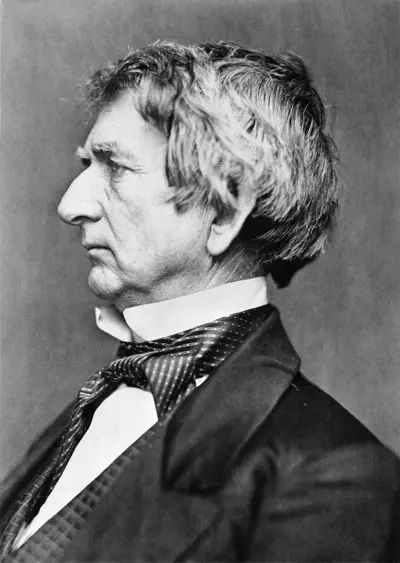
William Henry Seward was United States Secretary of State from 1861 to 1869, and earlier served as governor of New York and as a United States Senator. A determined opponent of the spread of slavery in the years leading up to the American Civil War, he was a prominent figure in the Republican Party in its formative years, and was praised for his work on behalf of the Union as Secretary of State during the Civil War.
