Herbert Hoover Quotes
Sea power could starve whole empires for food, and all their industries for raw material.
Herbert Hoover, 1874-1964, 31st President of the United States (Republican, IA), Hugh Gibson, U. S. Diplomat and Ambassador, Problems of Lasting Peace, 1942
Sourced by: Eigen's Political and Historical Quotations

In international law, a blockade is an act of war by the brocading country against the country that is blockaded—not against 3rd parties that may have to obey the blockade. For example before the War of 1812, France and England were at war and each blockaded the other’s ports. The United States was affected by the blockade in that our ships could not go in or out of blockaded ports with goods. However nether country was at war with us. All neutral nations must respect a blockade or the blockading nation is entitled to use force to enforce the blockade, but that is not an act of war. In 2011, Gaza was at war with Israel, and Israel blockaded Gaza. A Turkish ship tried to bring goods to Gaza and Israel seized the ship by force and brought it into a near natural port (Egypt). Israel was entitled to enforce its Gaza blockade, but they were not at war with Turkey. However if Israel, blockaded a country where there was not an existing war, the blockade itself would be an act of war.


Military men tend to rely so much on military history that they are almost always fighting the last war. Soon air power would supplant sea power as the critical factor. Then nuclear power, and then nuclear weapons became too severe for actual use and yet wars still continued with no consensus as to that will be in the future.


In the first year of WWI, the British Fleet kept the German Fleet bottled up in port. As a result, the British had a very successful sea embargo against the Germans who rarely challenged the British fleet even though they had some major, powerful, capital ships. See {642234}. Meanwhile, the German ships were in no position to harass much less destroy Allied (French, Russian or English) shipping.


Xerxes ignored her advice and attacked the Greek fleet at the Battle of Salamis. As Artemisia had predicted, the outnumbered Greeks routed the forces of Xerxes’ coalition preserving “The West” from dominance by “The East.” Artemisia’s fleet was the only one in the coalition to enjoy military success in the battle. See Xerxes {45633}. Artemisia is one of the first female military leaders and the only female naval commander until the end of the 20th century. She was 2500 years before her time.

There were few military thinkers at that time who would agree with Goebbels on this point.


Selling supplies to foreign enemies has been an American problem for a long time. The next day, Congress passed the Embargo Act of 1813.

The German naval command—without the permission of the Kaiser—at the eve of a losing war decided that the entire German navy would make a grand attack against the far superior English fleet. It was to be a virtual suicide attack on a grand scale. However, most German sailors heard about the plan and refused orders to attack in what was the largest mutiny in history. The German naval leaders then took the fleet out to sea and scuttled all the ships so that the English would not capture them. The result was the same but tens of thousands of lives were saved; many German officers felt that German naval honor had been lost.


Two of the major issues of the War of 1812 were the right of American ships to trade in Europe. The British were at war with France and boycotted all ports controlled by the French. They would seize American ships bound for or having traded with French areas. In addition, many American merchant seamen had formerly served in the British Navy and British warships would stop American merchant ships and remove “suspected” deserters and force them into British military naval service. Captain Lawrence was mortally wounded in this battle. See {625136}.

Koxinga had an overwhelmingly superior force, and wanted the Dutch to surrender and avoid bloodshed. The Dutch with their typical European colonial attitude, had great difficulty surrendering to “natives” even if outnumbered. Finally, the Dutch Commander agreed to surrender. Koxinga then established a Chinese Government on the Island and became a great hero of the Ming Dynasty. Note the graphic of the statue to him which is one of the very few Chinese memorial statues to a military hero showing him in action—very similar to European statues. Already Koxinga’s massed wooden junks with small cannon and fire torches had sunk one of the Dutch warships (they were not iron but had some iron plates on the deck to protect the gunners) and there were so many junks that the other Dutch ships sailed out to sea to avoid the Chinese huge number of junks.

Estonia had moved a Russian Soviet era monument to WWII dead Soviet Soldiers from a prime location in the center of their capital to a location outside of town. Russian-speaking Estonians were outraged and fomented violent demonstrations and riots that almost paralyzed the city. At the same time 85,000 Estonian computers were hijacked and used to implement a denial of service attack on some of the major government sites including the main bank, blocking all those webservers from serving normal customers on the Internet. The Prime Minister and other Estonian officials accused the Russians of the cyber-attack and likened it to a blockade which is an act of war under international law. What complicates cyberattacks is that there might have been some Russian nationalists who, with no knowledge of the government could have implemented a denial of service attack where so many accesses to servers are engineered that the servers crash. The perpetrators may have been instigated by the Russian government or not. They could have been any place in the world when they did it.


This quotation illustrates Jefferson’s isolationist streak. He would have abandoned all American oceangoing ships and thereby avoid war. When he became President, however, he rethought his earlier position and was aggressive in developing the American Navy, using it at the risk of war.

In WWII 15 years later, the Japanese seized most of the natural rubber plantations, and the U. S. would have been in great trouble had not American industry expanded the technology developed by the Germans and the Russians in making synthetic rubber in 1931. Whitford’s warning had not been heeded and rubber was rationed throughout the Second World War.


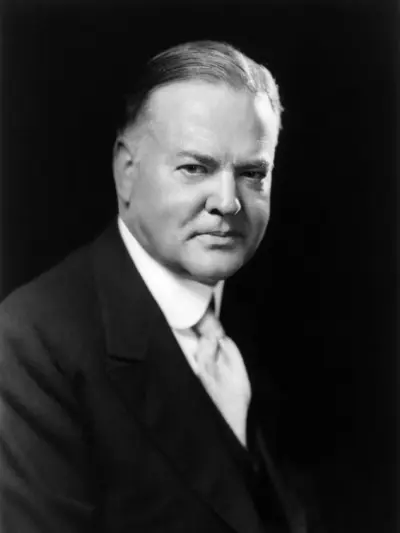
Herbert Clark Hoover was an American politician, businessman, and engineer, who served as the 31st president of the United States from 1929 to 1933. A member of the Republican Party, he held office during the onset of the Great Depression. Before serving as president, Hoover led the Commission for Relief in Belgium, served as the director of the U.S. Food Administration, and served as the third U.S. Secretary of Commerce.
