Wendell Willkie Quotes
If the British Fleet were lost or captured, the Atlantic might be dominated by Germany, a power hostile to our way of life, controlling in that event most of the ships and shipbuilding facilities of Europe.
Willkie, Wendell L. Statement to the Senate Foreign Relations Committee, 11 Feb. 1941. Published in The New York Times, 12 Feb. 1941, p. 4.


There were few military thinkers at that time who would agree with Goebbels on this point.


This quotation illustrates several historical differences of the past with today. To be a world superpower, one had to have a dominant navy. Yet that navy was, in Churchill’s concept, a defensive system. It could protect the nation from invasion, and its merchant ships on the seas, but a navy provided no threat to invade towns and villages in Europe or elsewhere. Germany and France in contrast, with their large armies could invade other nations and menace Europe and Asia. It also illustrates why the navy and the army were considered completely separate departments of government in that they had different functions. The early American government had a Navy Department and Secretary but no Secretary of the Army or standing army.

Germany had a very small and insignificant navy. It was Tirpitz who persuaded the nation to develop sea power.

Military men tend to rely so much on military history that they are almost always fighting the last war. Soon air power would supplant sea power as the critical factor. Then nuclear power, and then nuclear weapons became too severe for actual use and yet wars still continued with no consensus as to that will be in the future.


He was referring to attacking the Barbary States. The Barbary Pirates had an incredible extortion racket going in the Mediterranean. If nations would pay them an annual sum each year, they would not attack and seize merchant ships of that country and sell the ships and goods while holding the sailors for ransom. See {640846}.


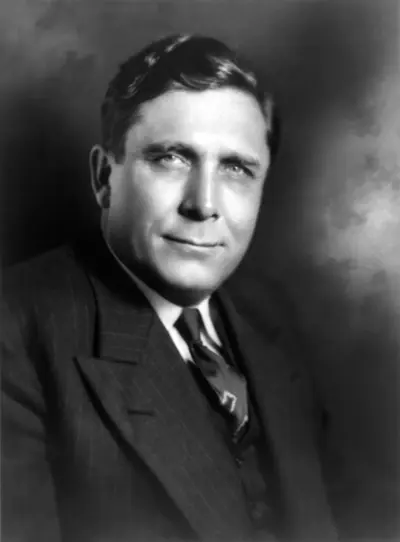
Wendell Lewis Willkie was an American lawyer, corporate executive, and the 1940 Republican nominee for President of the United States. Willkie appealed to many convention delegates as the Republican field's only interventionist: although the U.S. remained neutral prior to Pearl Harbor, he favored greater U.S. involvement in World War II to support Britain and other Allies. His Democratic opponent, incumbent President Franklin D. Roosevelt, won the 1940 election with about 55% of the popular vote and took the electoral college vote by a wide margin.
