Alfred Thayer Mahan Quotes
The surer of himself an admiral is, the finer the tactical development of his fleet, the better his captains, the more reluctant must he necessarily be to enter into a melee with equal forces, in which all these advantages will be thrown away, chance reign supreme, and his fleet be place on terms of equality with an assemblage of ships which have never before acted together.
Mahan, Alfred Thayer. The Influence of Sea Power Upon History, 1660-1783. Little, Brown, and Company, 1890, p. 12.


Gingrich, who avoided serving in the military throughout his life, was frequently opining on military matters, tactics and strategy in his speeches, media appearances and many writings. Generally, he was a Chicken Hawk {625110} urging military action and war although he had personally never experienced it. He spent much time in military meetings and conferences, and thought that he had developed some expertise from this and his extensive reading.


Military men tend to rely so much on military history that they are almost always fighting the last war. Soon air power would supplant sea power as the critical factor. Then nuclear power, and then nuclear weapons became too severe for actual use and yet wars still continued with no consensus as to that will be in the future.

Koxinga had an overwhelmingly superior force, and wanted the Dutch to surrender and avoid bloodshed. The Dutch with their typical European colonial attitude, had great difficulty surrendering to “natives” even if outnumbered. Finally, the Dutch Commander agreed to surrender. Koxinga then established a Chinese Government on the Island and became a great hero of the Ming Dynasty. Note the graphic of the statue to him which is one of the very few Chinese memorial statues to a military hero showing him in action—very similar to European statues. Already Koxinga’s massed wooden junks with small cannon and fire torches had sunk one of the Dutch warships (they were not iron but had some iron plates on the deck to protect the gunners) and there were so many junks that the other Dutch ships sailed out to sea to avoid the Chinese huge number of junks.

The sloop Margaretta was escorting 2 small merchant vessels came into the port of Machias, Massachusetts to purchase some lumber and firewood. However the commanding officer of Margaretta did not like the terms of the negotiations and threatened the town. An aroused and angry group of patriots then boarded and attacked the two merchant ships. The commander of Margaretta then maneuvered out of the port having lost the two small ships. But the Patriots were angry with the commander of the sloop and being excellent seamen who knew the local waters, used one of the merchant ships and a small local vessel to chase down the Naval sloop. They then boarded and captured Margaretta and fatally wounded the commander, James Moore. While Lexington was the first land victory for the patriots, this was the first sea victory and the Margaretta was the first British warship that was captured by the Patriots.


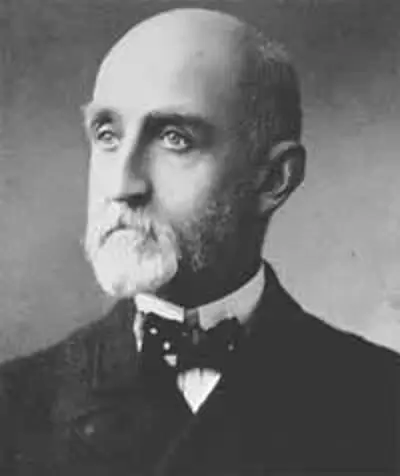
Alfred Thayer Mahan was a United States naval officer and historian, whom John Keegan called "the most important American strategist of the nineteenth century." His book The Influence of Sea Power Upon History, 1660–1783 (1890) won immediate recognition, especially in Europe, and with its successor, The Influence of Sea Power Upon the French Revolution and Empire, 1793–1812 (1892), made him world-famous and perhaps the most influential American author of the nineteenth century.
