Andrew Jackson Quotes
Nullification means insurrection and war; and the other states have a right to put it down.
Jackson, Andrew. Correspondence of Andrew Jackson. Edited by John Spencer Bassett, vol. 4, Carnegie Institution of Washington, 1929.

It would be almost 30 years until Jackson would have been proved correct and the Civil War had begun.

Committee of the Congress. This was the prevailing Congressional and public view except for the South which had coalesced around an intellectual rationalization. See {618013}.


Commonly referred to as the Kentucky Resolution. This concept of Nullification was one of the factors that aggravated the tensions leading to the Civil War. Were the individual States to be the arbiters of whether or not a Federal act was Constitutional or was it to be the Supreme Court.


England had gone through a bloody Civil War with the Parliament on one side and the King on the other. The King lost and was beheaded later that year. See {597353}.

Warning to John Calhoun and other South Carolinians about the implications of their nullification of the Tariff Act of 1832:
Soon after Jackson's reelection, delegates from South Carolina, led by John C. Calhoun, moved quickly to declare "null, void, and no law" the Tariff Act of 1832. The president's reaction to the Ordinance of Nullification was swift.


Hunton was an old West Point classmate of Sherman’s and was also a Tennessee slave holder, who wanted his escaped slaves back under the Fugitive Slave Act. Actually, Army Commander McClellan had issued an order just a few days before, prohibiting the Army of returning fugitive slaves to their rebel owners who were guilty of treason. See {619337} Sherman however wrote his friend and made a moral and ethical argument that transcended the law and at the same time pointed out the ethical hypocrisy of the treasonous Confederates.

This is an important quotation because it shows that slavery was the principle reason that the South succeeded and began their rebellion. In the early 20th century, there was a movement to make the Confederacy and the Southern rebellion more noble by promoting the idea that the Civil War was fought by the South for more lofty reasons than greed and slavery such as States Rights, original construction, different economic philosophies and the like. This was a more noble cause then the right to deny other human beings their rights, to own other human beings who they could beat, torture, sexually use and even murder them was a pretty selfish and demeaning reason to have started a rebellion that would then cost more Americans their lives than any other American conflict. The succession documents and others of the Southern States and the Confederacy make it clear that slavery was THE issue and fleeting references to any of the others were only made to complain about the potential effect on abolition and the refusal of the abolitionist states to cease aiding and protecting fugitive slaves.


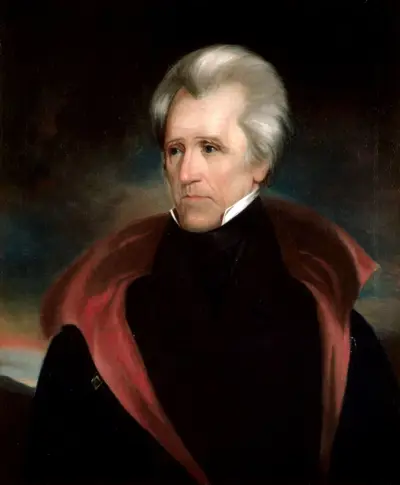
Andrew Jackson was an American lawyer, soldier, and statesman who served as the seventh president of the United States from 1829 to 1837. Before being elected to the presidency, Jackson gained fame as a general in the United States Army and served in both houses of the U.S. Congress. An expansionist president, Jackson sought to advance the rights of the "common man" against a "corrupt aristocracy" and to preserve the Union.
