Harry S. Truman Quotes
Negotiating with Stalin was like dealing with an octopus.
Harry S Truman, 1884-1972, 33rd President of the United States (Democrat, MO), C-SPAN Presidential Libraries: Harry S Truman, September 21, 2007
Sourced by: Eigen's Political and Historical Quotations

Churchill put great store in personal interaction in diplomacy.


Harriman at that time was the United States Ambassador to Russia and one of President Roosevelt’s closest advisers. There were those who claimed that the Roosevelt administration was very naïve about the potential danger of Stalin. This statement as well as others like it, show that the administration was not so naïve and ignorant.


He was a virulent anti communist and an opponent and foe of Chiang Kai-shek who he regarded as too moderate.


The "iron curtain" phrase was used here a few months before Winston Churchill's famous speech using it {411311}. Also, it appears to have been used earlier than that by Nazi Propaganda Minister Joseph Goebbels in Das Reich. And Viscountess Snowden used the phrase in her memoirs of a Past WWI trip to Russia {616546}. It is not known whether Troubridge or Churchill were familiar with those works.

Seeger had joined the Young Communist League as a young boy, and was a supporter of Joseph Stalin until all the information about Stalin was made public by Russian Premier Nikita Khrushchev. Seeger, along with other Stalin apologists throughout the world realized that the criticisms of Russian Communism under Stalin were not just right wing propaganda.


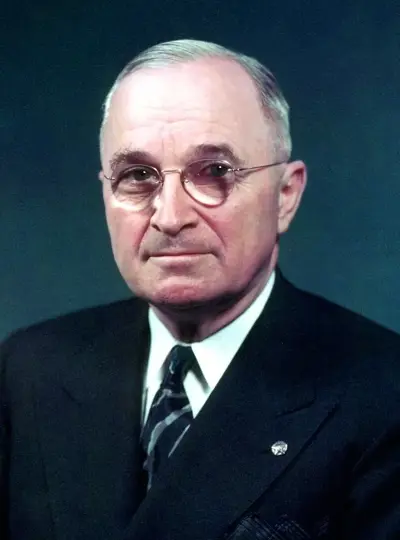
Harry S. Truman was an American politician who served as the 33rd President of the United States (1945–53). He served as a United States Senator from Missouri (1935–45) and briefly as Vice President (1945) before he succeeded to the presidency on April 12, 1945 upon the death of Franklin D. Roosevelt. He was president during the final months of World War II, and approved the plan to drop atomic bombs on Hiroshima and Nagasaki. Truman was elected in his own right in 1948. He presided over an uncertain domestic scene as America sought its path after the war and tensions with the Soviet Union increased, marking the start of the Cold War.
