George Washington Quotes
I have been surprised, as often as I have reflected, and really cannot devise any reason, why the Assembly should be so much averse to established rules for the regulation of their forces, which long experience in established armies fully evinces the necessity of. And my surprise is yet increased, when I consider how cautiously worded the act of Parliament is, to preserve the rights and liberties of the people against the arbitrary proceedings of the military officers.
Washington, though a military officer at the time, was very concerned with protecting the rights of citizens from abuse by the military for he had seen much of the abuse. The third amendment for example was later written to protect people from the military. The Constitution also requires that Congress make such rules for the military. Note that Washington, our first senior military officer at the time, wanted Congress to make detailed rules for the conduct of soldiers. In the 20th and 21st century, as the imperial presidency developed, there was a political view that only the military officers and the Commander in Chief should make the rules and regulations for the soldiers. However, there was no question but that the Founding Fathers saw this as a legislative branch function. Congress and Presidents have contested for this power every since.
George Washington, 1732-1799, 1st President of the United States (VA), Letter to Governor Robert Dinwiddie, September 23, 1756
Sourced by: Eigen's Political and Historical Quotations

Miles, a hero of the Indian Campaigns (although he led the atrocities at the massacre at Wounded Knee) and then the leading military figure in America was an opponent of the policies of the new young President and had political aspirations of his own for the Presidency. Miles’ opinions were printed in the press. He maintained that he was not speaking as the Commanding General of the Army but personally as a citizen. The President surprised almost all by publicly scolding and reprimanding Miles when he next came to the White House. Five days later Roosevelt made the reprimand official, effectively ending Miles career. The issue of when senior military officers can criticize the administration has been debated ever since. Roosevelt was also a war hero himself, and although the military was shocked by such “savage” treatment of a senior officer, the President had public opinion on his side. Every decade or so there is a military official who does not care for the administration’s policies and expresses himself publicly. President Truman’s firing to General Douglas Macarthur was the most dramatic case, but Truman was well aware of the Miles and TR precedent.

The irony is that it is just for the lack of this fundamental principle that Napoleon eventually became the Government and the Military in France.
This quotation was the beginning of a struggle between Congress and the Presidency over war powers. In this case, President Jefferson had sent a squadron of American ships to protect American Shipping from Arab Corsairs who preyed on shipping and captured crews and passengers of all nations to hold for ransom or put into slavery. The American ships, instead of only providing defense, attacked some of the ships of the Bey and freed a captured American frigate and crew. Jefferson acknowledged that the act was a grey area and asked for authority more authority for the Executive Branch to initiate action. The balance of authority for war and/or defense has been struggled over ever since.

History is replete with instances of military coups. In the final analysis, in every country at all times, there is no force in a society that could cope with a military which decides to act on its own. The Founding Fathers were very conscious of this reality and history, hence the firm civilian control of the military in America.


His statement was on the issuance of Executive Order 9981 which outlawed military segregation and granted equal treatment and opportunity to all service members regardless of their race:


America is almost unique among nations where the military has never been a force that either dominated or controlled the government or acted independently from it. The Founding Fathers knew well the history of Europe and other nations, and built many checks into our Constitution and our traditions with George Washington, setting the example for American military men forever after.

There was a fear of standing armies in early America that lasted to some extent until the 20th century.


This seemingly prosaic quotation is one of the most significant quotations in history. At the outbreak of the Civil War, the telegraph was rapidly developing as a communications technology. One of Lincoln’s greatest achievements was the appreciation of the new technology and the deployment of it to gain an immense strategic advantage which was a major factor in all warfare thereafter. Lincoln placed ALL telegraphy of the North under the control of the military. He then had a telegraph terminal installed in the War Department right next to the White House. He would spend many hours in the Telegraph Room reading dispatches as they were coming in. To the distress of some of his military commanders, the Commander in Chief actually, for the first time in history, received virtually real time intelligence about a battle, and issued orders to the commanders in the field in real time. The quotation is one of the early examples. Ironically, Lincoln had more real time battlefields information in the Civil War than most of our Presidents did until the Vietnam War when digital, radio communications were exploited for the purpose.

Rush ran the hospitals for the Revolutionary Army and talked to many officers and enlisted men, and also observed much of the British military practices. These suggestions were discussed but never passed as regulations. They are fascinating insights into the problems of the general officers of the time who were generally selected for their socioeconomic status rather than other qualifications. Note the drunkenness limitation for a commanding general was proposed to be limited to only 1 allowed bout of drunkenness every 24 hours. It was, he thought, totally unrealistic to require generals to be always sober when on duty. With the mediocre quality of senior officers, Washington had to depend on foreigners like Lafayette, Von Steuben and others. And Generals who were leading attacks out in front of their men like Benedict Arnold immediately became heroes and one of the reasons he ended up as a traitor was that he thought that he was badly treated relative to the “society” Generals who would not accept him and denigrated his exploits when they themselves had never been close to a battle front.

The President told McNamara that if the administration does not send the troops the Generals want, they will be blamed for any military failures that occur. If they do send all the troops that the Joint Chiefs wanted, they would be going far beyond the limits that the Defense Secretary recommended and the President would have preferred. JBJ felt he really had no political choice. He authorized the wanted troops further escalating the war. See his special assistant’s question about that decision in {617151}.


There is frequently a disagreement between the military and civilian leaders just as there are disagreements among most political personnel. Hawks, and people who have had experience in the military tend to think that military advice on military matters should be determinative with the President and Congress. Others tend to believe that military advice should be considered, but if it were always adhered to, there would be no point in having civilian control over the military. See {639667} for an example of when military leadership advice prevailed and it was a mistake.


The French and English, with larger numbers and more experienced troops and officers, wanted the American units to come under the command or their officers and be integrated into the allied army. However Wilson established the tradition that American troops fighting abroad most always fight as an American Army under American Command. Although resented then and into the 21st century by America’s allies who are expected to fight under American command, it is a tradition that no American major politician has seriously challenged since then.


In Japan at that time there was no civilian control of the military and the military resented any attempt at the civilian government to influence military affairs in any way whatsoever. At the same time the military often tried to influence the politics of civilian government. The Emperor made this feeble effort to inhibit that, but as World War II proved, he had not tried very hard to prevent the military from dominating the country.


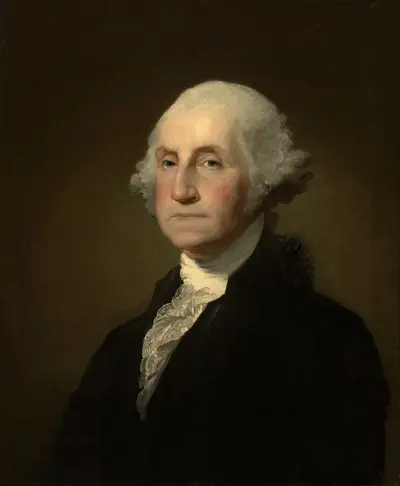
George Washington was the first President of the United States (1789-97), the Commander-in-Chief of the Continental Army during the American Revolutionary War, and one of the Founding Fathers of the United States. He presided over the convention that drafted the current United States Constitution and during his lifetime was called the "father of his country".
