John F. Kennedy Quotes
I cannot recall a single case where a Vice President contributed one electoral vote in a Presidential election.
The irony of this statement is that Kennedy then selected Lyndon Johnson as his running mate. Johnson, most experts agree, was able to swing Texas into the Democratic tally, and many of those same experts generally agree with Kennedy’s point but believe that his election was the only exception to the general rule in modern times.
John F. Kennedy, 1917-1963, 35th President of the United States (Democrat, MA), Interview, NBC Meet the Press January 3, 1960 after he had been nominated as a Presidential candidate
Sourced by: Eigen's Political and Historical Quotations

This is not just a theoretical possibility. It has occurred several times. The latest was on the 1990 election where Gore got half a million more votes than George W. Bush, but Bush became President.


The Supreme Court divided 5-4 and all the Florida ballots were not counted.

Al Gore had substantially won the popular vote but needed Florida to win the electoral vote. There had been a series of vote counting irregularities with many people being denied the right to vote to the point that no one was sure who had won Florida. The election moved from the ballot box to the courts and the Florida Supreme Court ruled that there should be some recounts in areas where Bush had supposedly won. The Bush forces and the Republicans appealed to the Supreme Court where the judges all reversed their traditional positions to support the party who had nominated them. Liberals who usually voted to have the Federal government override the states, voted for Florida to be upheld. Conservatives who usually supported the right of the States to decide such things without Federal Interference, voted to overturn the State Supreme Court. There were 5 Republicans and 6 Democrats and George W. Bush won the election by one judge’s vote.

Jefferson thought that the possibility that a man could become President even though more Americans voted for his opponent was undemocratic and a great flaw in our Constitution. It has actually happened several times and each time the Electoral College debate renewed, but there has never been enough concern to produce a Constitutional Amendment.


The column was written in the midst of the confusing 2000 Presidential election.

On that date, a few days before the election the FBI Director publicly announced that he was reopening the Investigation into possible wrongdoing of Ms. Clinon's use of provate emails. He had earlier cleared her of all criminal wrongdoing and and he claimed that they had found a new computer that had some e-mails that they had not not yet examined for possible criminal activity. In addition WikiLeaks published on the Internet thousands of private e-mails that the Russians had hacked from her campaign chairman and her comittee. The two things started moving her trend down so that she only one the popular vote by almsot 3 million votes and she needed more to overcome the electoral collage gave to rural and small states. Ironically, the FBI went throught the contents of the computer and after the election announced that there was nothing there that incriminated Ms. Clinton, and there was no criminal activity found in all the hacked e-mails. And the FBI Director was chastized by the Republican Justice Department after Donald Trump took office for improperly making pubic investigation details before there were any findings. The FBI Director was subsequently fired but this and otehr reasons were given as the reason.


He saw Obama’s name as a fatal problem with the American Electorate which turned out to be more tolerant than Brown gave them credit for.

The margin of victory was 50,000 votes; however, there were accusations that Buchanan had “bought” the election.

The electoral college had tied between Thomas Jefferson and Aaron Burr, and under the Constitution, this threw the decision to the House of Representatives. The House was deadlocked politically between Federalists and Democratic Republicans, but Jefferson had won the popular vote by a substantial margin. Morris, a leading Federalist, and one of Jefferson’s political enemies, however argued that the will of the people should be respected, and the man who won the popular should be President. The vote then went to Jefferson who became our third President.
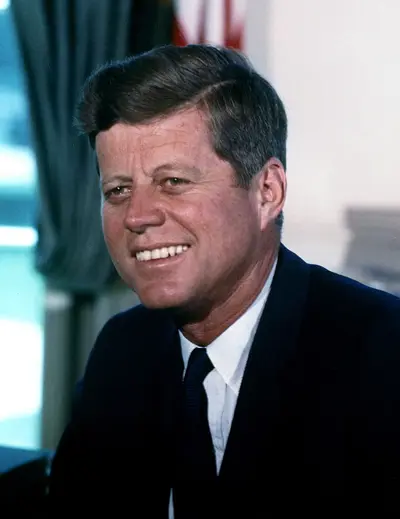
John Fitzgerald Kennedy, often referred to by his initials JFK, was an American politician who served as the 35th president of the United States from 1961 until his assassination in 1963. Kennedy served at the height of the Cold War, and the majority of his work as president concerned relations with the Soviet Union and Cuba. A Democrat, Kennedy represented Massachusetts in both houses of the U.S. Congress prior to becoming president.
