Albert B. Chandler Quotes
There will be a new president in this country someday, and I have as good a chance as anybody.
Albert B. Chandler, 1989-1991, Governor of Kentucky (Democrat), U. S. Senator (Democrat, KY), U. S. Baseball Commissioner, Quoted in the Lexington, KY, Herald, July 25, 1937
Sourced by: Eigen's Political and Historical Quotations


This quotation illustrates the "winner take all" conceopt of many political cultures that call themselves and think of theselves as a democracy. But a true democracy does not allow a tyranny of the majority--especially a very narrow minority.

Harriman was the senior Democratic leader of the era. Every aspiring Democratic politician would make it his business to get to meet Harriman and try and get his endorsement. However, Carter was not a typical politician and when he decided to run for the Presidency, he had not even met many of the leading Democratic Party leaders. Harriman, a man of the old school, could not believe that anyone in the party who he did not know could possibly have the connections and the sophistication to win the presidency. However, Watergate had seared the American political soul and voters were not looking for a veteran, sophisticated politician. Nixon had been that.


On that date, a few days before the election the FBI Director publicly announced that he was reopening the Investigation into possible wrongdoing of Ms. Clinon's use of provate emails. He had earlier cleared her of all criminal wrongdoing and and he claimed that they had found a new computer that had some e-mails that they had not not yet examined for possible criminal activity. In addition WikiLeaks published on the Internet thousands of private e-mails that the Russians had hacked from her campaign chairman and her comittee. The two things started moving her trend down so that she only one the popular vote by almsot 3 million votes and she needed more to overcome the electoral collage gave to rural and small states. Ironically, the FBI went throught the contents of the computer and after the election announced that there was nothing there that incriminated Ms. Clinton, and there was no criminal activity found in all the hacked e-mails. And the FBI Director was chastized by the Republican Justice Department after Donald Trump took office for improperly making pubic investigation details before there were any findings. The FBI Director was subsequently fired but this and otehr reasons were given as the reason.


Jefferson thought that the possibility that a man could become President even though more Americans voted for his opponent was undemocratic and a great flaw in our Constitution. It has actually happened several times and each time the Electoral College debate renewed, but there has never been enough concern to produce a Constitutional Amendment.

The three richest men in America—John D, Rockefeller, Andrew Carnegie, and Morgan, usually major rivals—had gathered together to decide what to do about William Jennings Bryan, who they viewed as very hostile to business and capitalism. (See {641037} and {641038} for Bryan quotation examples that concerned them.) They agreed to combine their efforts and back William McKinley who was running for the Republican Presidential nomination. In those days, the nominee was chosen by a small group of party leaders and their resources guaranteed McKinley the post. They then put large amounts of money to campaigning against Bryan and for McKinley including dirty tricks, many of which are illegal today. It is not known for certain whether McKinley knew the extent of the involvement of the monopolists, but shortly after assuming the Presidency he cut back on many of the relatively few regulations that then existed to control unbridled capitalism. Their effort went for naught when McKinley was assassinated and Theodore Roosevelt became President. Roosevelt would not be bribed or intimidated, and he did more to control monopolies than even Bryan would likely have.

The electoral college had tied between Thomas Jefferson and Aaron Burr, and under the Constitution, this threw the decision to the House of Representatives. The House was deadlocked politically between Federalists and Democratic Republicans, but Jefferson had won the popular vote by a substantial margin. Morris, a leading Federalist, and one of Jefferson’s political enemies, however argued that the will of the people should be respected, and the man who won the popular should be President. The vote then went to Jefferson who became our third President.

A major problem of new and emerging democracies is that many people believe that majority rule per se is democracy. In Egypt for example, Morsi and his Muslim Brotherhood won the election. They then assumed that they had the right to do anything including exempting the government from judicial review or deciding the role of women in society or denying freedom of religion to non-Muslim citizens. Democracy is not a serial autocracy with each new autocrat being selected by a free and fair election.


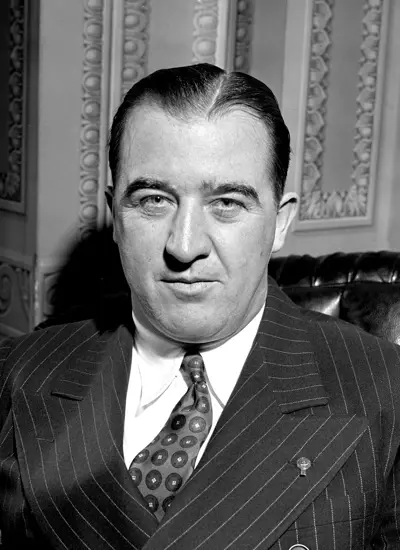
Albert Benjamin "Happy" Chandler Sr. was an American politician from Kentucky. He represented Kentucky in the U.S. Senate and served as its 44th and 49th governor. Aside from his political positions, he also served as the second Commissioner of Baseball from 1945 to 1951 and was inducted into the Baseball Hall of Fame in 1982. His grandson, Ben Chandler, later served as congressman for Kentucky's Sixth District.
