Theodore Roosevelt Quotes
I believe in corporations. I believe in trade unions. Both have come to stay and are necessities in our present industrial system, But where, either one or the other, there develops corruption or mere brutal indifference to the rights of others … then the offender, whether union or corporation, must be fought.
Theodore Roosevelt, 1858-1919, 26th President of the United States (Republican, NY), Letter to Ray Stannard Baker, October 21, 1903
Sourced by: Eigen's Political and Historical Quotations


Van Cleave was rabidly opposed to any anti-trust government “interference” with business and he was also virulently opposed to labor unions. See {638616}, {638615}, {638614}, and {638613}.


Darrow defended many labor leaders and organizers who had been accused of various wrongdoings—sometimes fairly and often on trumped up charges:. In a 1930 letter to Mark Sullivan he further explained:


Roosevelt shocked the conservative members of his own party with this statement. Labor unions were not then an accepted concept in American society. Anti trust legislation and enforcement was in its infancy and companies in an industry commonly conspired as to price fixing, labor negotiations and market share allocations. TR had a scrupulous sense of fairness and equity.


In 1937 there were major automobile and steel strikes. President Roosevelt castigated both sides of the dispute:

Vladimir Lenin

Ironically, this view was also held by many of the capitalist “Captains of American Industry” who believed that all unions were revolutionist regardless of the views of the union’s membership or leadership. Even today, there are some who still equate trade unionism with communism and revolution. The majority of the unions and the left never believed that, but the extreme communists and extreme capitalists did than and some do today.


At the time, it did seem impossible that labor and capital would ever have harmonious relations. But the notion that slavery would solve the problem is as preposterous as anything ever entered into the American political dialogue. But there were many in the South, and some in the North, who actually believed it. Even 150 years later, while labor and capital relations were much better than pre Civil War, they still could not be described as “harmonious” or “friendly”.
He had squads of thugs that he would “rent” out to other gangsters for their enforcement activities and to unions to protect themselves from goons and intimidate non union workers. However, he would not let his men work as goons and strike busters or for companies—despite huge pay offers—to keep their workers in line, a common practice at the time.


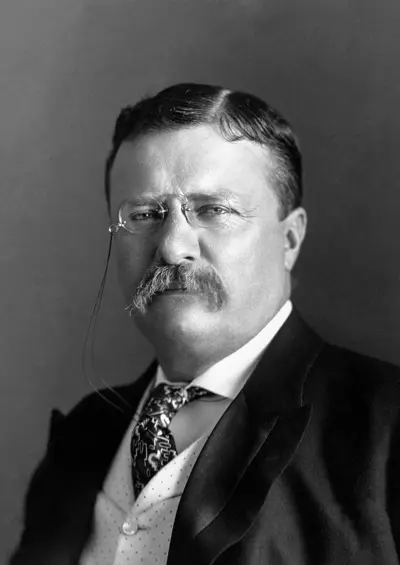
Theodore Roosevelt Jr., often referred to as Teddy or his initials T. R., was an American statesman, conservationist, naturalist, historian, and writer, who served as the 26th president of the United States from 1901 to 1909. He previously served as 33rd governor of New York from 1899 to 1900 and the 25th vice president of the United States from March to September 1901. Roosevelt emerged as a leader of the Republican Party and became a driving force for anti-trust and Progressive policies.
