William Randolph Hearst Quotes
The labor union in enforcing a high scale of wages brings about the distribution of wealth throughout the entire community.
William Randolph Hearst, 1863-1951, U.S. Congressman (Democrat, NY), Founder, Independence League Party, Journalist and publisher, Interview, Chicago Tribune, January 19, 1905
Sourced by: Eigen's Political and Historical Quotations


Ford was a virulent hater of labor unions. He even hired goons to beat up union members.


He had squads of thugs that he would “rent” out to other gangsters for their enforcement activities and to unions to protect themselves from goons and intimidate non union workers. However, he would not let his men work as goons and strike busters or for companies—despite huge pay offers—to keep their workers in line, a common practice at the time.
Ford was then 74 years old and had become a very different man than in his youth when he was the hero of labor. He was very paranoid at this time. He even thought that financiers were actually backing the labor unions because their purpose was to go to war against Hitler who Ford greatly admired and supported. See {642379}. He claimed that the way they would do it is to fund the labor unions so most workers would join unions. This he thought would eliminate competition and lower workers’ wages. When workers’ wages were pushed low enough, the workers would demand American entry into the war to create government spending on armaments and a labor shortage to drive wages up again. There was not a single financier who was actually paying or lending any money to labor unions, and most industrialists other than Ford complained that labor unions would always demand higher wages. Ford’s son Edsel was the chief operating officer of Ford Motor Company, and did his best to work around his father to keep the company healthy and deal with a terrible labor relations problem his father caused.


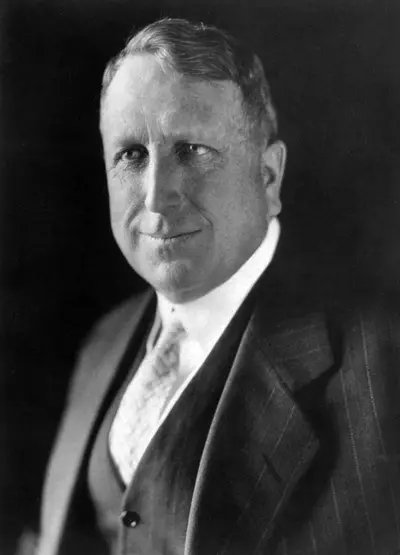
William Randolph Hearst Sr. was an American businessman, newspaper publisher, and politician known for developing the nation's largest newspaper chain and media company, Hearst Communications. His flamboyant methods of yellow journalism influenced the nation's popular media by emphasizing sensationalism and human interest stories. Hearst entered the publishing business in 1887 with Mitchell Trubitt after being given control of The San Francisco Examiner by his wealthy father, Senator George Hearst.
