John F. Kennedy Quotes
I ask you tonight ... to judge me on the basis of fourteen years in the Congress—on my declared stands against an ambassador to the Vatican, against unconstitutional aid to parochial schools, and against any boycott of the public schools (which I attended myself)—instead of judging me on the basis of these pamphlets and publications we have all seen that carefully selected quotations out of context from the statements of Catholic Church leaders, usually in other countries, frequently in other centuries, and rarely relevant to any situation here—and always omitting, of course, that statement of the American bishops in 1948 which strongly endorsed church-state separation.
John F. Kennedy, 1917-1963, 35th President of the United States (Democrat, MA), Speech to the Houston Ministerial Association [Protestant], Houston, TX, September 12, 1960
Sourced by: Eigen's Political and Historical Quotations

In the city of Narragansett, RI, there Lester York had each Christmas season dressed up as St Nicholas, 4TH century Catholic Bishop, the precursor to Santa Clause. He played the part of the Bishop and discussed Christmas in that context. The presentation was very educational as students could learn of the culture of that time but they also received an authentic religious sermon of the time. By inviting York into the public elementary schools, the students were learning some history and culture but they were also involved in a religious service and doctrine—the divinity of Christ. The former was good; the latter illegal as the public schools were in addition to educating historically communicating religious messages. York’s presentations had many supporters who had argued that York’s presentation conveyed Christian messages very well and children should not be denied that opportunity. After much community discussion, the public schools withdrew their invitation to York, and he gave his excellent presentation in many community churches.


This is one of the key documents showing the “wall of separation of church and state” was in use in early America. Almost 200 years later the Chief Justice of the Supreme Court seemed ignorant of this communications. See William Rehnquist: {373663}

The Vatican & the Chinese Communist Government had been at odds for years with much of the Chinese church going underground. Fr. Jin had been jailed for a decade. Then the government allowed him and the Catholic Church and operate openly, but there were still Vatican conflicts over numerous issues including the right of the Government to approve senior appointments of church officials—a privilege the church claimed exclusively. The Vatican ordered Jin not to cooperate and especially not to reopen the national theological seminary which the government had ordered closed. There had been no training for Chinese priests and Jin wanted to reopen the national theological seminary but the Vatican refused cooperation waiting for the government to capitulate to the Vatican’s various demands. Fr. Jin defied the Vatican & reopened the seminary. Without officially admitting their failed tactics, the Vatican let the discipline issue against Jin drop & the national theological seminary thrived.

In that era the favoritism of the government—especially state and local government—in favor of the of the Protestant Christians. Politicians started challenging the clear unconstitutional favoritism. The reformers were Republicans often referred to by the Democrats as “Godless Republicans”. A century later the Republicans would oppose strict separation of church and state with the Southerners and Fundamentalist Christians in their party and the Democrats fighting to maintain strict separation of church and state.
Liberia had been founded by American Free Negroes. American religious missionary organizations were very helpful in building the new nation, but they also created their own parochial, religious day schools. And behind the scenes they blocked efforts to establish a public school system. Walker, in America, was trying to get public support for allowing there to be public schools in Liberia.

In this speech, and in {634756}, he argued against unification to a public that was mostly opposed. The leadership was interested because they were facing the Muslim Ottoman Turks who were getting more powerful each day. The Eastern Emperor, Constantine XI, more of a soldier and politician than a cleric, wanted the military strength of the Franks and other Western European Christian armies to help protect the Eastern Empire and Byzantium and were willing to reunite under the Pope to get it. Gennadios and his faction were not. They prevailed and the next year, the Muslims conquered Byzantium which had little help from the armies of the Western Roman Empire.

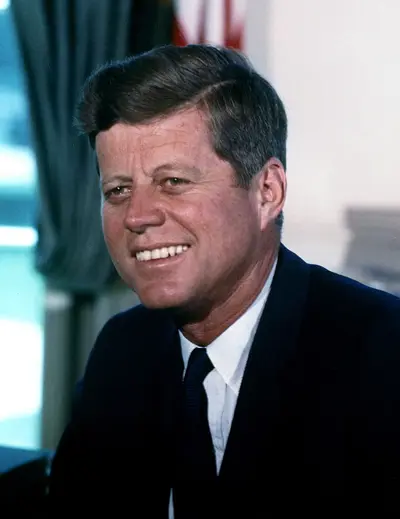
John Fitzgerald Kennedy, often referred to by his initials JFK, was an American politician who served as the 35th president of the United States from 1961 until his assassination in 1963. Kennedy served at the height of the Cold War, and the majority of his work as president concerned relations with the Soviet Union and Cuba. A Democrat, Kennedy represented Massachusetts in both houses of the U.S. Congress prior to becoming president.
