CHARLES TREVELYAN
(Sir Charles Edward Trevelyan, 1st Baronet)
During the Irish Potato the official who was in charge of the relief program was a highly religious, fundamentalist Christian who believed that the famine was God’s retribution.
At the time, the House of Lords which was made up of aristocrats who inherited their titles and the Lords could undo any legislation that was passed by the House of Commons. This gave the aristocrats of England a veto on all legislation.
During the Potato Famine in Ireland his philosophy led him to do little or nothing while over a million Irish starved. The philosophy was later echoed by American President Herbert Hoover during the Great Depression except that the situation was not so bad, and a much smaller percentage of the population was starving. The moral hazard question is still argued whenever welfare, unemployment insurance and social safety nets are politically debated, moral hazard is still an issue. Trevelyan was at an extreme, inhumane posture on this point, with Hoover about in the center for his time, but the Potato Famine and the Great Depression changed Ireland, England, the United States and most of the rest of the world, and now the debate is to the extent of the welfare and methods of ameliorating the moral hazard.
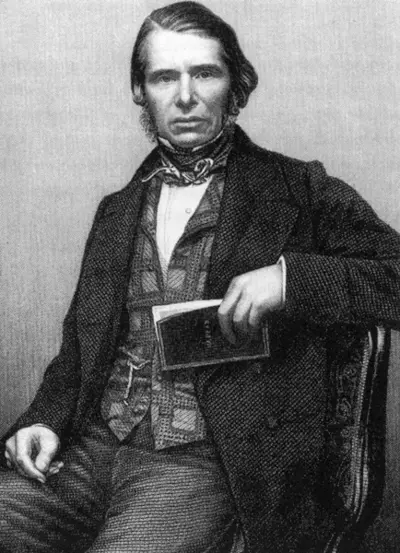
Sir Charles Edward Trevelyan, 1st Baronet, KCB was a British civil servant and colonial administrator. As a young man, he worked with the colonial government in Calcutta, India; in the late 1850s and 1860s he served there in senior-level appointments. Trevelyan was instrumental in the process of reforming the British Civil Service in the 1850s.
