Norman Dorsen Quotes
Zealous groups threaten to infringe civil liberties when they seek government support to impose their own religious views on non-adherents. This has taken many forms, including attempts to introduce organized prayer in public schools, to outlaw birth control and abortion, and to use public tax revenues to finance religious schools.
Norman Dorsen, President, American Civil Liberties Union, Civil Liberties, 1986
Sourced by: Eigen's Political and Historical Quotations


The then current example was with same sex marriage. Some people who claimed that their religion declared same sex marriage as a sin and prohibited their aiding and abetting that activity. As a result, they claimed that their right of religious freedom allowed a county clerk to refuse to issue the marriage license or a hotel to refuse to allow a gay couple to rent their facility for a wedding, or a retail store to refuse to sell the couple bedding.


John Witherspoon, a Presbyterian minister with evangelical sympathies, was one of the signers of the Declaration of Independence.


Williams was the first theologian who not only advocated religious toleration but argued that Christianity demanded it and the separation of church and state.


Carter was personally one of the most religious of our Presidents.


While this principle is very clear to us today, and was to the people who originally ratified The Constitution, there were many attempts by Christian groups to establish a privileged position for Christianity. For example, for years the Sunday Sabbath was legally enforced by unconstitutional Blue Laws that prohibited businesses from operating on the Christian Sabbath and prohibited activities that compete with Sunday church attendance. Supreme Court Justice Story even argued that the First Amendment allowed Christian religious supremacy and Cooley wrote this to refute Story’s now discredited doctrine.


The official city seal at the time contained the Christian fish symbol.
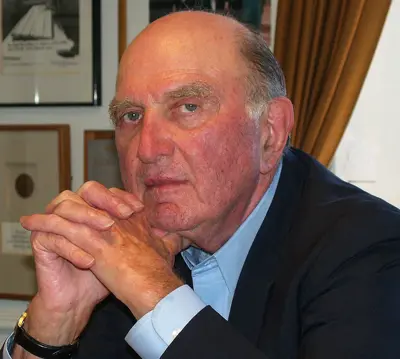
Norman Dorsen was the Frederick I. and Grace A. Stokes Professor of Law and Co-Director of the Arthur Garfield Hays Civil Liberties Program at the New York University School of Law, where he specialized in Constitutional Law, Civil Liberties, and Comparative Constitutional Law. Previously, he was president of the American Civil Liberties Union, 1976–1991. He was also president of the Society of American Law Teachers, 1972–1973, and president of the U.S. Association of Constitutional Law in 2000.
