JOHN WITHERSPOON
(John Knox Witherspoon)
The debate had come to an impasse over the issue of voting and taxation by state equally or proportional to the population. Witherspoon warned of the consequence of there being no agreement on some form of unity.
Note that although the industrial revolution was beginning, the value of factories, inventory, machines, and raw materials were not yet recognized by some of the leading intellectuals of America. The perspective was totally agricultural.
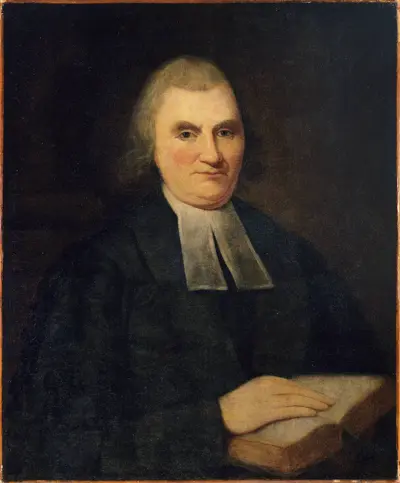
John Witherspoon was a Scottish American Presbyterian minister and a Founding Father of the United States. Witherspoon embraced the concepts of Scottish common sense realism, and while president of the College of New Jersey (1768–1794; now Princeton University), became an influential figure in the development of the United States' national character. Politically active, Witherspoon was a delegate from New Jersey to the Second Continental Congress and a signatory to the July 4, 1776, Declaration of Independence. He was the only active clergyman and the only college president to sign the Declaration. Later, he signed the Articles of Confederation and supported ratification of the Constitution. In 1789 he was convening moderator of the First General Assembly of the Presbyterian Church in the United States of America.
