John Witherspoon Quotes
No moderate man views it in any other light than as an axiom, or self-evident truth, namely, that if any excuse for disobedience were once admitted, or any indulgence granted to these tender-conscienced inferiors there would be an end of all government in an instant; neither commands nor obedience could proceed one step further, but every individual instrument of power in that fatal society, astonished at the monstrous phenomenon, would stare at one another; all the wheels of the political machine would stop at once. nay would split into ten thou-sand pieces; every relation and connection of their parts would be instantly dissolved, and the beautiful whole would rush into a wild chaos of anarchy and confusion.
those engaging in civil disobedience This was written in Scotland before Witherspoon emigrated to America. A major issue of political and religious debate at the time in Scotland was civil disobedience. “Reform” religious advocates argued for the moral propriety of civil disobedience where the protester’s conscience felt that the laws were immoral and unjust. The were referred to as “Moderates.” Witherspoon, early in his career, was one of the conservatives who argued then, against the Moderates, that civil disobedience should be punished very severely. The conservative rhetoric at the time sarcastically referred to protestors as having “tender consciences.” The issue was contentious then, later in America, and is so even today.
John Witherspoon, 1723-1794, Presbyterian minister, President of Princeton University, Member of the Continental Congress (NJ) & Signer of the Declaration of Independence, Ecclesiastical Characteristics or The Arcana of Church Policy
Sourced by: Eigen's Political and Historical Quotations


Veterans of WWI had been authorized a bonus by Congress, and had been issued certificates, but Congress had not appropriated the money to redeem the certificates. Veterans of World War I formed a “Bonus Army,” some twenty thousand unemployed veterans and a like number of family members arrived in Washington DC with their hurting families and sett up a shantytown across the river from Capitol Hill. They demanded of Congress their bonus pay. Instead President Hoover castigated them and authorized the U. S. Army to disperse the veterans. General Douglas MacArthur commanded the troops and in one of the great disgraces of the United States, he used excessive force, MacArthur attacked women and children with infantry, cavalry and tanks. Governor Bartlett was in Washington at the time and became an eye witness in an era where there was no television.

Earlier, a virtually all white police force in nearby 67% Black Ferguson, had shot an unarmed black young man who was 20 feet away with his hands up, 7 times killing him and then leaving the body uncovered on the street for over 4 hours. Many people of all races began to peacefully demonstrate in Ferguson and were met with military assault weapons pointed at them and military armored vehicles, with the police illegally (as later determined by the courts) were interfering with the right to protest. The demonstrations turned to riots and there was looting and arson of business establishments. The demonstrations started to spread to nearby St. Louis and other cities as the news spread. While the Ferguson officials had behaved so badly and stupidly, the St. Louis mayor exhibited democratic leadership that was an example for others. Slay was then a 4 term mayor, being reelected more than any other mayor in St. Louis history, and was one of the outstanding politicians in America.


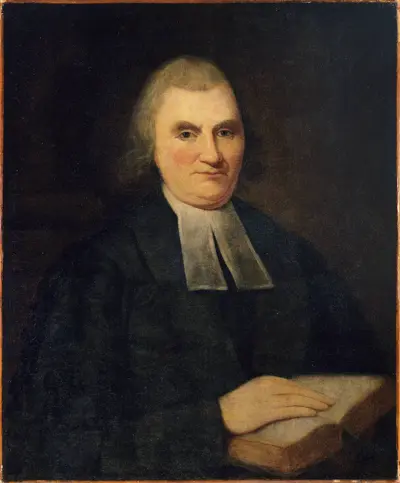
John Witherspoon was a Scottish American Presbyterian minister and a Founding Father of the United States. Witherspoon embraced the concepts of Scottish common sense realism, and while president of the College of New Jersey (1768–1794; now Princeton University), became an influential figure in the development of the United States' national character. Politically active, Witherspoon was a delegate from New Jersey to the Second Continental Congress and a signatory to the July 4, 1776, Declaration of Independence. He was the only active clergyman and the only college president to sign the Declaration. Later, he signed the Articles of Confederation and supported ratification of the Constitution. In 1789 he was convening moderator of the First General Assembly of the Presbyterian Church in the United States of America.
