Edward Grey Quotes
From the material point of view the proposal is unacceptable, for France, without further territory in Europe being taken from her, could be so crushed as to lose her position as a Great Power, and become subordinate to German policy.
Grey, Edward. Twenty-Five Years, 1892-1916. Vol. 1, Frederick A. Stokes Company, 1925, p. 327.


This was a warning to Saudi Arabia that the United States might seize the oil fields. At the time we were not getting enough oil for domestic needs and the military in Europe and in Vietnam. The King arranged to secretly supply oil to the United States while maintaining to the other Arab countries that it was maintaining the boycott of the West.


This is a view with which most diplomats and foreign policy strategist do not agree. They point to Hitler in WWII where Nazi Germany had enormous power but brought themselves to ruin via terrible strategic decisions that Hitler made. Declaring war on the United States, Invading Russia, and not developing nuclear weapons are 3 of the worst. Many argue that the United States strategy in invading Iraq and diverting resources from Afghanistan was a poor strategic decision.


Germany had world power aspirations before Adolf Hitler.


She and her husband, like many of the "America Firsters", believed that Hitler should be allowed to overrun Europe and Russia.


A reversal of Calusewitz's famous dictum--see {361616}


At the time, the major European countries were in a competitive scramble for colonies in Africa—so much so that there were very few independent territories left. The maps and borders of Africa were really decided by the Europeans.
They were both children of Queen Victoria of England.

England had made diplomatic inroads in Holland and was with most Dutch more popular than France. There was also a lot of trade between Holland and England. Napoleon wanted to break the English-Dutch relationships.

A few months later, that is exactly what Germany did. She was hoping that England would not enter the war despite her treaty obligations, but she was willing to risk the possibility. The Czar had a strong espionage and intelligence service active in Germany, but, like so many other intelligence failures, the intelligence operatives and analysts had military and economic facts but had little understanding of the German culture which propelled Germany to what to most other cultures was “irrational policy making.” People and nations often engage in irrational activities, even against their own self-interest.


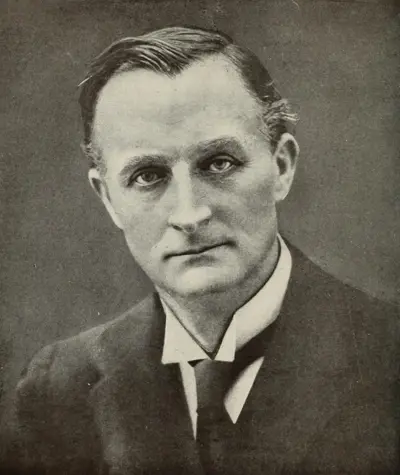
Edward Grey, 1st Viscount Grey of Fallodon, KG, PC, DL, FZS, better known as Sir Edward Grey, was a British Liberal statesman and the main force behind British foreign policy in the era of the First World War.
