Thomas Paine Quotes
For the fate of Charles the first, hath only made kings more subtle — not more just.
Paine, Thomas. Common Sense; Addressed to the Inhabitants of America. R. Bell, 1776, p. 16.

Many American colonists had relatives and friends in England, and Paine argued that American independence would help and not het the English people.

When Henry came to “George II” he was interrupted by the Speaker, John Robinson, who shouted “Treason!” Henry had been railing against the Stamp Act.

England had gone through a bloody Civil War with the Parliament on one side and the King on the other. The King lost and was beheaded later that year. See {597353}.

Cromwell was not opposed to monarchy per se as long as it was reasonably checked. He saw Charles II as a terrible monarch. After deposing Charles, he and his associates had to come up with some form of government. As “Lord Protector” he was a de facto monarch without the trappings.


Actually, these revolutionists were quite moderate and what they wanted was his abdication and for him to go to England but they used the fear of trial and beheading to induce him to leave rather than have a pitched battle. He did.


His immediate frustration was the title form of address first selected by Congress for the President. See {586767}


Prior to Cooke’s indictment of English King Charles I, there was a concept of Royal Impunity—that a sovereign could not legally be called to account for his actions as ruler of the state. The concept of “sovereign immunity” was a concept where the sovereign and his agents could be given immunity for specific actions, but they never would have impunity again where there were no limits to the crimes they might commit against their own people. Charles I refused to even recognize Cooke’s indictment and so have heads of state called to account for their major crimes since then all the way down to Saddam Hussein in 2006 who made the same argument. Cooke was himself hanged, drawn and quartered almost 20 years after the Charles I trial for his part in the “Regicide” so the concept of Royal Impunity did not die quickly.


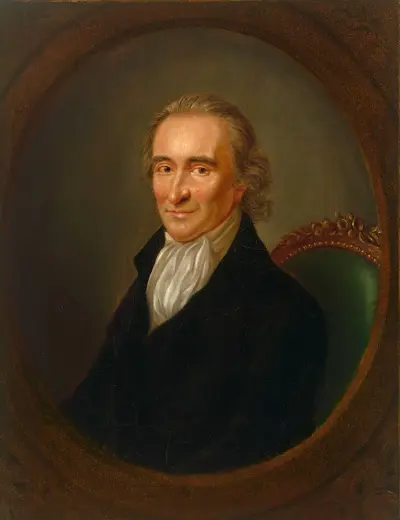
Thomas Paine was an English-born American political activist, philosopher, political theorist, and revolutionary. He authored Common Sense (1776) and The American Crisis (1776–1783), the two most influential pamphlets at the start of the American Revolution, and helped inspire the patriots in 1776 to declare independence from Great Britain. His ideas reflected Enlightenment-era ideals of transnational human rights. Historian Saul K. Padover described him as "a corsetmaker by trade, a journalist by profession, and a propagandist by inclination".
