Jonathan Mayhew Quotes
The king is as much bound by his oath not to infringe the legal rights of the people, as the people are bound to yield subjection to him. From whence it follows that as soon as the prince sets himself above the law, he loses the king in the tyrant. He does, to all intents and purposes, un-king himself.
Mayhew, Jonathan. A Discourse Concerning Unlimited Submission and Non-Resistance to the Higher Powers. D. Fowle and D. Gookin, 1750, p. 45.

Many American colonists had relatives and friends in England, and Paine argued that American independence would help and not het the English people.

Nine years later he was responsible for Napoleon’s election as Consul.


After the King’s appointment in 1921 she “advised” him on establishing this regime and operating the government. At a time that women could not even vote in England, Bell was a kingmaker and major power in an area of the world that was much more sexist than England at the time.


Prior to Cooke’s indictment of English King Charles I, there was a concept of Royal Impunity—that a sovereign could not legally be called to account for his actions as ruler of the state. The concept of “sovereign immunity” was a concept where the sovereign and his agents could be given immunity for specific actions, but they never would have impunity again where there were no limits to the crimes they might commit against their own people. Charles I refused to even recognize Cooke’s indictment and so have heads of state called to account for their major crimes since then all the way down to Saddam Hussein in 2006 who made the same argument. Cooke was himself hanged, drawn and quartered almost 20 years after the Charles I trial for his part in the “Regicide” so the concept of Royal Impunity did not die quickly.


Note that the Queen always used the 3rd person rather than the 1st when referring to herself. This was true of most of the leading public figures in England at the time. Although she detested Gladstone, she gained control of her feelings and did her duty and “sent for” him to form the Government. She was personally delighted when, as she predicted, his government then had political difficulties.


The statement so offended the Lords—the highest court of England—that he was imprisoned by the Lords and not released until he had recanted the position. The argument goes on today in many countries incuding the United States.


Bartolo was the most famous legal expert of his day and for many years thereafter as he died at the age of 44—the height of his career. In Italy, Spain and other nations of Europe there were statutes passed that said if there was no precedent in Roman Law, the writings of Bartolo should dictate the law.
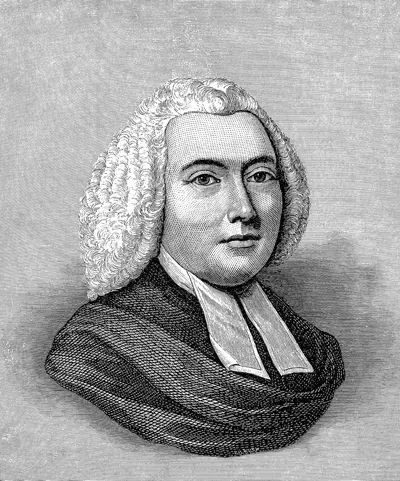
Jonathan Mayhew was a noted American Congregational minister at Old West Church, Boston, Massachusetts.
