Herbert Hoover Quotes
Boundary and peace treaties are not inspired documents.
Herbert Hoover, 1874-1964, 31st President of the United States (Republican, IA), Hugh Gibson, U. S. Diplomat and Ambassador, Problems of Lasting Peace, 1942
Sourced by: Eigen's Political and Historical Quotations


Although Great Britain had abolished slavery, British economic interests during the Civil War suffered because of the northern blockade of the South. Much political opinion in England was hostile to the blockade policies of the Union. Bright, a great admirer and supporter of the United Sates and the Union cause was concerned that the United States might drift into War with Great Britain. His letter to Senator Sumner was written with the understanding that it would be in shared with President Lincoln, and it was actually read at a cabinet meeting.


The President was spending all day and most of the evening with Japanese and Russian negotiators. He was trying to mediate an end to the Russo-Japanese War. Despite all the difficulties, Roosevelt found a new skill of personal international diplomacy. The war seemed intractable, but Roosevelt was able to get a peace treaty signed for which he was awarded the Nobel Peace Prize. It is doubtful that any modern president could spend so much concentrated time on an issue that was really not in the national interest of the United States. However, Roosevelt’s time and effort investment paid off in that by settling that dispute and getting nothing out of it for America or American business, the United States was in world opinion, elevated to a new status of fair, impartial and non-selfish international activity—a model that despite some lapses in later years, the United States has been unique.


Holland was then a Republic and federation of the separate states. Each elected representatives to the ruling legislature, however, many states had not been pleased that their representatives did not reflect the desires and public opinion in the individual states and in some cases took bribes to vote in favor of special interests. The Dutch did NOT want their representatives to use their own judgment but wanted them to seek and follow the instructions of the legislatures of each state.


Hamas, a terrorist group, however had taken over the Gaza Strip by force, ousting the Fatah Palestinian government. Hamas were then the de facto dictatorial rulers of almost 2 million Palestinians while the Fatah Government controls the West Bank with most of the Palestinians.

This is an interesting historical quotation because it shows the role of the Queen in the English Government at the middle of the 19th century. What the quotation shows is that the drafts of significant foreign policies were sent to the young 29 year old Queen for approval. However, her review was not perfunctory, In {630732} it showed how she analyzed proposed policies and pointed out flaws and shortcomings. In this quotation she not only criticized a part of the draft policy but actually wrote her own copy to be included. War was then raging in Lombardy between the Austrians under Marshal Radetzky and the Piedmontese under the King of Sardinia and she believed the Palmerston draft did not do enough to make the Austrians see England as an objective party. And she wanted to be much more proactive and have the British Foreign Ministry mediate the conflict. This would be like a President of the United States taking a draft of a foreign policy from the State Department, instead of either approving or disapproving it, redrafts it to add some additional elements and make the language more comfortable for the parties. And she did this when by U. S. standards she was not old enough to even run for Congress. (And women in the United Kingdom could not even vote.) Note that the formality of the time required that the Queen refer to herself in the third person and not the first.


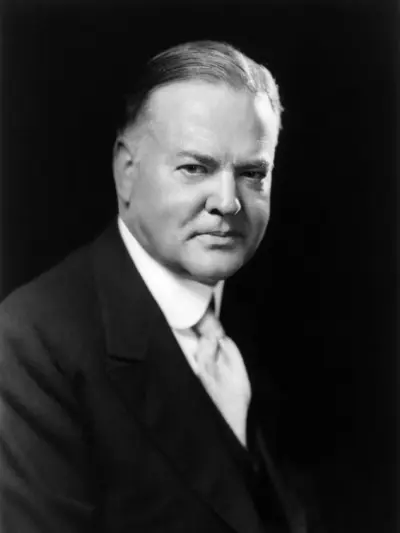
Herbert Clark Hoover was an American politician, businessman, and engineer, who served as the 31st president of the United States from 1929 to 1933. A member of the Republican Party, he held office during the onset of the Great Depression. Before serving as president, Hoover led the Commission for Relief in Belgium, served as the director of the U.S. Food Administration, and served as the third U.S. Secretary of Commerce.
