William Rawle Quotes
The formation of a treaty often requires secrecy and dispatch …
William Rawle, 1759–1836, Attorney & Constitutional Scholar, A View of the Constitution of the United States, 1825
Sourced by: Eigen's Political and Historical Quotations


Holland was then a Republic and federation of the separate states. Each elected representatives to the ruling legislature, however, many states had not been pleased that their representatives did not reflect the desires and public opinion in the individual states and in some cases took bribes to vote in favor of special interests. The Dutch did NOT want their representatives to use their own judgment but wanted them to seek and follow the instructions of the legislatures of each state.

The TPP was the first Trade Agreement that had ever been classified as “Secret” when it was being negotiated. This was one of the most hotly debated policies of the era. Even Congress could not get a look at what was being negotiated although the Senate would have to ratify it when finished for it to become effective. .On the surface, it is outrageous that a non-military or defense activity should be secret in a democracy. What could be wrong with the Congress and the public being aware of a trade negotiation while it was being formulated and negotiated? Kirk and other apologists for the secrecy policy argue that because of the trade-off relationships among different clauses and facets of a trade treaty, there are many proposals that are made just to initiate a bargaining position, and the negotiators themselves neither expect nor intend those proposals to be a part of the final treaty. To then have groups of Americans get upset and start a lobbying position against a treaty when what they object to is not ever going to be in the treaty poisons in the public mind the entire treaty which then could be killed for something that was never real to begin with. A similar thing happened with the Obamacare legislation. Congress drafted the various clauses and many were included as part of the bargaining process or misunderstood because of poor first drafting. Opposition to those clauses set a tone of animosity against the bill as a whole. After the bill was passed, the clauses that were most unpopular or misinterpreted were the main reason that citizens gave for opposing Obamacare even though they were not in the legislation. Advocates of secrecy point out that the original Constitutional Convention was entirely secret with all the delegates agreeing that if each and every proposal that was debated were public, there would develop so much opposition that the result could never be ratified later. Yet it is hard to argue against transparency of government processes in a democracy.


In the history of diplomacy and peace treaty negotiations, the various national representative would meet in secret, negotiate treaties and add secret clauses. Then the treaty was finally made public for approbal or ratification in the different countries no one would be told of the secret clauses. Each side would have a written secret copy of these clauses, but the publics of the country would never know. For example, the agreements about various WWII issues that were secret have not yet been made public in the United States or England. Wilson wanted to put an end to that diplomatic ploy and wanted all the peace treaty clauses to be public with nothing secret. He also wanted the deliberations to made in public woth press access. He had little support for the idea in most European nations.


The Secretary of State had obtained an agreement of Israel and the Palestinians to open Peace Talks. The press immediately wanted to know who was saying what to whom and what positions the parties had. However, this was a classic example where transparency would make successful negotiations impossible—it would end the negotiations before the parties could even discuss possible alternatives.


In the modern media age, there is intense pressure on peace negotiators to reveal progress, problems, reactions, suggestions that are made by the parties to the peace talks. Rumors and premature public knowledge of the details of peace talks often can undermine and sometimes destroy and progress that was being made.

Manava Dharma Shastra. This text is a part of the Hindu Holy Texts. Hindus believe that Mahu was a prophet whose text is revealed or inspired.


Meiji the Great. This was a momentous event in Japanese history. This was the first time that the Japanese Emperor had appointed diplomats to conduct foreign affairs. Prior to that, Japan was so isolationist that at times Japanese who had any contact with Westerners would be executed. Then the Emperor had a reception for foreign diplomats. Never before in the history of the Empire had its divine head deigned to admit to his presence the despised foreigner. The Emperor was only in his second year of rule at the time.

The notion of Executive Privilege developed over the years. Our first President thought nothing of giving the Senate access to all the papers and records regarding the negotiations of the treaty with Great Britain.


The Constitution was not drafted until 1787 and was ratified later. In the interim the young United States functioned under the Articles of Confederation, in a sense, our first Constitution. This clause established that the Federal Government should have the exclusive power and authority to conduct foreign affairs.

These have actually evolved in a number of areas such as GATT and other trade areas.

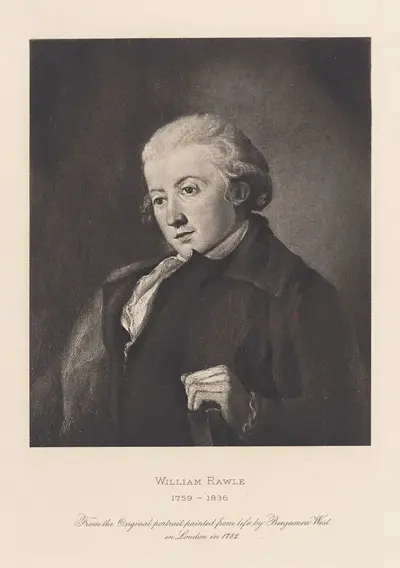
William Rawle was an American lawyer in Philadelphia, who in 1791 was appointed as United States district attorney in Pennsylvania. He was a founder and first president of the Historical Society of Pennsylvania, president of the Pennsylvania Abolition Society, and for 40 years a trustee of the University of Pennsylvania.
