Empress Dowager Cixi Quotes
When it comes to China’s relationship with foreign countries, it is of course better to have peace. But before we can have real peace, China must be ready to fight. If we give in to every demand, then the more we seek peace, the less likely we are going to get it.
Cixi, 1835–1908, Empress Dowager of China, Statement to government official Shi Nianzu, Royal Audience, ~1884
Sourced by: Eigen's Political and Historical Quotations

China had not strengthened is military as Empress Cixi had desired--{641697}. The result was a very weak country that other nations took advantage of and bullied their way to the most extraordinary concessions. This in turn, made the foreign diplomats lose respect for the Chinese officials with whom they dealt and many were treated with disrespect and abuse—like servants. This outraged influential, traditional, conservatives like Weng and began to develop the foundation of the anti-Western Boxer Movement in China.


This appears to be the first American utterance of a longstanding doctrine of foreign policy.
In this case, he was referring to the situation with the Barbary Pirates who had an incredible extortion racket going in the Mediterranean. If nations would pay them an annual sum each year, they would not attack and seize merchant ships of that country and sell the ships and goods while holding the sailors for ransom. Jefferson favored and authorized war—a naval attack which for many reasons the European nations had not done (they just paid the tribute). Then a peace treaty was finally signed—the first American Treaty.


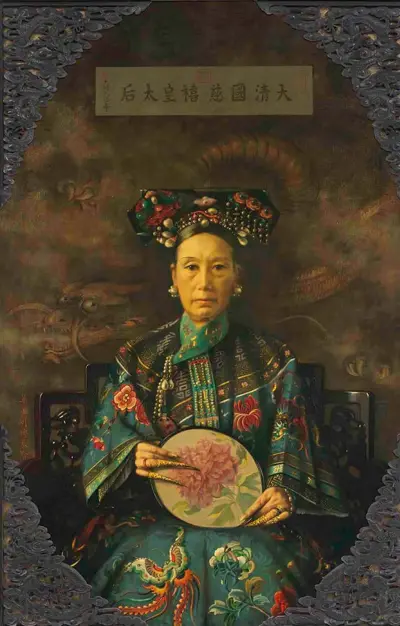
- Born: November 29, 1835
- Died: November 15, 1908
- Nationality: Chinese
- Profession: Noblewoman
Empress Dowager Cixi was a Chinese empress dowager and regent who was the de facto supreme ruler of China in the late Qing dynasty for 47 years, from 1861 until her death in 1908. Of the Manchu Yehe Nara clan, she was elected as a concubine of the Xianfeng Emperor in her adolescence and gave birth to a son, Zaichun, in 1856. After the Xianfeng Emperor's death in 1861, the young boy became the Tongzhi Emperor, and she became the Empress Dowager. Cixi ousted a group of regents appointed by the late emperor and assumed regency, which she shared with Empress Dowager Ci'an. Cixi then consolidated control over the dynasty when she installed her nephew as the Guangxu Emperor at the death of the Tongzhi Emperor in 1875, contrary to the traditional rules of succession of the Qing dynasty that had ruled China since 1644.
