George Washington Quotes
[As I am] informed that numbers of free negroes are desirous of enlisting, he gives leave to the recruiting officers to entertain them, and [will] lay the matter before the Congress, who, [I] doubts not, will approve of it
Just a month earlier Washington had issued a contradictory order. See {614221}. The Continental Congress, under pressure from the Southerners, compromised.
George Washington, 1732-1799, 1st President of the United States (VA), General Order, December 30, 1775
Sourced by: Eigen's Political and Historical Quotations

The resolution was transmitted to the Provincial Congress on June 6, 1775 where it was tabled. Essentially this position was taken by the Continental Congress and General Washington—See {614018}—and then Washington reversed himself, {614220}

Washington quickly changed his mind when he realized that there were many Negroes fighting for his army and acquitting themselves very well. The pressure for troops and the English invitation to Negroes to help them and get their freedom, caused Washington to flip-flop on this point to the distress of most of his fellow Southerners. See {614220}.

Despite the critical need of the war, racism was so extensive in the WWII military that Blacks were relegated to menial duty of cooking, truck driving and construction but were actually not allowed to fight at the beginning despite the fact that many had volunteered. Many whites—especially the southerners—were convinced that Negroes could not fight, that they lacked the courage and commitment. The need for troops in the Pacific theater was so great that in the invasion of Saipan that was so difficult, Black troops were committed to the fight and performed brilliantly. The Commandant of the Marine Corps, General Vandergrift was not only the first Marine 4 star general who was on active duty, but he personally was a recipient of the Medal of Honor. When he spoke, all marines and many others in the service listened. This was the break-though. Negroes in combat was no longer some kind of social experiment for most Marines except the most vitriolic rascists.
At this point, Stearns had already organized and trained 3,000 Black Troops from the South. He was a strong advocate of recruiting and enlisting as many slaves as they could. Ironically, the desire to serve in the Army with a weapon, was symbolically a powerful symbol of equality and manliness that it was effective with Northern free Blacks and Southern escaped slaves. Another interesting thing was that Stearns insisted that the ex-slaves not only made better soldiers than the Confederates but that they were better than most Union White troops. That view was not promulgated very publically.

There were so many Blacks fighting for the Americans in the Revolution that the British Commander had to issue a special proclamation which would make slaves of any Negro captured but issued freedom to those who would desert. Despite the greater risk to Negro Revolutionaries than their white counterparts many volunteered and few deserted.
loyalty oath to the King of England His “Ethiopian Regiment” was the first Black military regiment in North America. Soon after, Rhode Island organized a Black military unit—see {613949}.

The New England and Middle Atlantic States had recruited and allowed Negroes to serve in their divisions with excellent results. These two Southern states were suffering badly as a result of the British Military dominance and atrocities. Almost all whites who were patriots were already under arms. Hence the recommendation. Despite their precarious position, the Southern States would not follow the recommendation. Many were convinced that the Blacks would never make good soldiers, and the those Southerners who disagreed were terrified that once armed, the Blacks would never submit to slavery and would support slave insurrections of the Black slaves who were not in the military.


By 1863, Negro troops were being used to fill in gaps in the Union forces. Many union generals resisted having colored troops under their command. Thomas, however, welcomed them, and won several major battles where black soldiers were instrumental in victory.

Benjamin was the Confederacy’s strongest proponent for use of Negro troops in exchange for a promise of freedom. Ironically, the racial prejudice of the Southern soldier may well have doomed the South’s last chance for independence. Lee, although he personally favored such a course of action, could not get a general sentiment from the army as a whole.

Negotiations regarding the exchange of prisoners and property. This was his view of his supposed obligation to return Negro slaves who had escaped and gone to the British during the war. The treaty of peace specified that all “property” including slaves, taken by, the British be returned to the Americans. But he and other officers did not always do so as they thought they had higher moral obligations. See {621936} for example.

Washington and his staff had throughout the Revolution wanted to enlist Negroes but were thwarted by the Southern and conservative blocs of the Continental Congress when they tried it in the South. However, they finally succeeded in Rhode Island. Other states followed when it was clear that the Rhode Island experiment had been successful. See {614120} for the policy statement of the legislature and {614119} for the motto and a picture of the Negro regiment. This was however not the first Black military unit in North America. The Loyalist Governor of Virginia had formed a regiment comprised of slaves who he emancipated. See {636965}.

The U. S. Navy had Black sailors even before the Civil War. Blacks had shipped out on Northern merchant vessels and whaling ships starting in colonial times. Many Blacks had nautical experience and were welcomed by the Northern Navy and treated very well. The Union Army in contrast was much more ambivalent about Blacks serving. Ironically the Navy was disbanded to save money and when it was reconstituted it was on a racially segregated basis completely foreign to American Naval history. It was the last of the American armed services to integrate and its officer corps has not desecrated as much as the other services.

The officers were all white, and Higginson was the Commander. It was his first experience with Negro troops, and he had heard much extrapolation from racist attitudes about Blacks not being able to make good soldiers. Ironically, the same suspicions of Blacks as military men carried over into the Second World War when this canard was disproved so publicly that it finally was erased with the exception of the most inveterate racists for whom no evidence would matter.

He had visited Washington DC.
[This was the first Abolition appeal written by a Black Man. It was published in Boston and was very popular going through two more printings within the next two years.]
_0_thumbnail_47x47.jpg "A portrait of Richard Allen, a Methodist bishop and founder of the African Methodist Episcopal Church")
Many whites thought that the solution to the problem of free and emancipated Negroes was to send them to Africa. They assumed that the negroes would by desirous of that solution also, but they rarely asked them. When they did, they received answers much like this one from one of the leading Black clergymen in America.
In 1820, convoyed by the war-sloop Cyane, American free Negroes (33 men ,18 women and some children) set out for Africa pursuant to a new program authorized by Congress and President Monroe. However, the details of the endeavor had not been worked out and after the Negroes’ experience in the U. S. the would-be settlers were suspicious of all government.

This Civil War recruiting poster was described by the Free Library of Philadelphia as “Civil War recruitment print targeting African Americans by evoking the freedoms granted by the Emancipation Proclamation. Depicts a montage of symbolic scenes centered around an African American Union soldier triumphantly holding up a sword and an American flag with the banner "Freedom to the Slave." He stands near broken shackles upon a tri-color flag adorned with a coiled snake. The flag is tugged upon by one of three joyous slaves freed by an African American soldier. Other scenes depict an African American man reading a newspaper on a rocking chair near a plow and child, African American children entering a "Public School" near a church, and a regiment of "U.S. Colored Troops" marching across a battlefield strewn with dead bodies.”

The Freedmen’s Bureau was an institution established after the Civil War to provide assistance to the newly emancipated and free slaves. Every constructive step taken by the Bureau was opposed and obstructed by “unreconstructed” Southerners and some Northerners. They had very limited resources and there was little known technically about how to accomplish their mission. However, tens of thousands of individual new freed Negroes profited immensely and there were some systemic successes such as Du Bois describes Quotation 643644. There were also some failures as described herein.

Scott was then the Special Advisor on Negro Affairs to the Secretary of War in the Woodrrow Wilson administration. Wilaon hs commited U. S. Troops to fight oversease to "make the world safe for democracy", but many blacks and whites also saw gross hypocricy in asking Negores to fight for a Jim Crow, segregated America. See the related quotation 644805. Scott was also the major aide to Booker T, Washington, one of the leading Negro educators but a very pliable man on equal rights for the Blacks. The problem for the administration was much greater than that of WWII where the president was seen as very sympathetic to Blacks while Wilson was himself a racist. And in WWII the fight against the Nazis was a fight agaisnt racial supremacy. So this quotation and Scott's role was very important to the administration.

Knight led a band of whites and blacks who fought off the Confederate Troops sent to Jones County of Missisippi, to eleminate the Free State of Jones which tehy had set up, and seceded from the Confederacy. They had infuriated teh Confederate Government becasue it was an interracial community with a great deal of intermarriage and no discrimination agaisnt Blacks and they welcomed runaway slaves and white deserters from the Confederate Army.
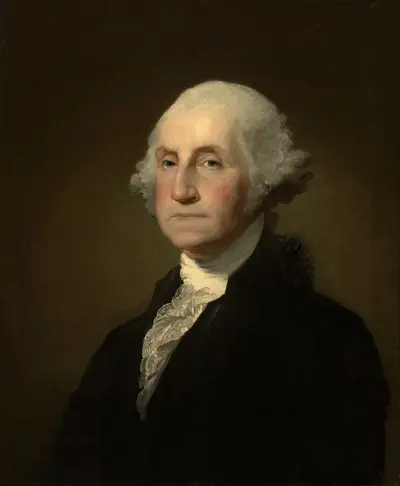
- Born: February 22, 1732
- Died: December 14, 1799
- Nationality: American
- Profession: President
George Washington was the first President of the United States (1789-97), the Commander-in-Chief of the Continental Army during the American Revolutionary War, and one of the Founding Fathers of the United States. He presided over the convention that drafted the current United States Constitution and during his lifetime was called the "father of his country".
