James Edward Oglethorpe Quotes
Allowing slavery will starve the poor white laborer.
James Edward Oglethorpe Quoted in Nancy Isenberg, White Trash: The 400-Year Untold History of Class in America 2016
Sourced by: Eigen's Political and Historical Quotations


Indian and Black slaves were outlawed very early in Connecticut, not on moral grounds of concern for the Indians and Blacks, but because of the negative effects on the white poor. Why would anyone pay the poor any more than the amortization costs of a slave? Therefore there was no way a poor white could make a living wage if slavery were to coexist.


Downing was the brother-in-law of the Governor. Many people think that the Puritans were very moral people but they were not that so much as rigid. There was no moral compunction for example against slavery as this letter shows.


Of particular interest is his point about the immigration of cheap, foreign labor in addition to presenting unfair competition to the American worker also regards him in society’s view and his own. It was a tremendous loss of dignity for now a free working man was no better than an ignorant, compliant Chinese coolie. This loss of dignity has been a problem to which politicians have not been very sensitive.


The minister was the leader of a sect that had emigrated from Germany to the new colony of George where slavery had been banned but wealthy planters were pointing to South Carolina north of them where slavery was producing riches for the slave owners and asking the Trustees back in England to allow slavery as they were at a competitive disadvantage. Oglethorpe, the leader of the community argued against slavery and was joined by other community leaders including Reverend Boltzius, The argued that slavery would curtail the opportunity for common white men. In this quote Boltzius pointed to Charlestown South Carolina to show the effect that slavery produced there. The wages for slaves, were wages paid to the slave’s owner. While plantation slavery was the most common form of slavery, but many slave owners without large plantations simply rented out his slaves. In some cases, the slaves were taught trades like carpentry so the owner could receive ore for his work. But the system allowed the slave owner to undercut the market, and all a white worker could make was the wage that slave owners were demanding for slave labor.

This is not a common quotation from Thoreau. The great man for whom the establishment had so much respect had a very anti-capitalist streak. His view is that the employer will generally never pay his laborers a fair wage. Instead he will pay the laborer the lowest rate for which he can obtain the laborers services. If the laborer generates added value for his wage, the employer is in a zero sum game with the laborer. If part of the added value—the profit is paid to the laborer, the employer does not have it for himself (or his stockholders). In most cases, the laborer is forced to work for his and his family’s subsistence. This theory argues that they only way the laborer will get a fair wage is if there is a labor shortage (assuming no government laws or union pressure is in the picture. Many capitalists argue that a “fair” wage is what a free man is willing to work for and a free employer is willing to pay. So economics is like politics in general with respect to fairness—there is no universally accepted definition of what is fair.


Ruffin is more widely known as the man who fired the first shot of the Civil War.


Labor leader Samuel Gompers used this statement to publically praise the passage of the Clayton Anti-Trust Act.


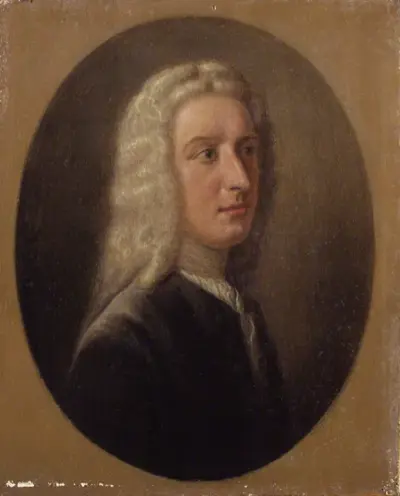
James Edward Oglethorpe was a British soldier, Member of Parliament, and philanthropist, as well as the founder of the colony of Georgia in what was then British America. As a social reformer, he hoped to resettle Britain's worthy poor in the New World, initially focusing on those in debtors' prisons.
