James Henry Hammond Quotes
The difference between us is, that our slaves are hired for life and well compensated; there is no starvation, no begging, no want of employment among our people, and not too much employment either. Yours are hired by the day, not care for, and scantily compensated, which may be proved in the most painful manner, at any hour in any street of your large towns
James H. Hammond, 1807-1864, U. S. Congressman & Senator (Democrat, SC), Senate Debate, March 4, 1858
Sourced by: Eigen's Political and Historical Quotations

Ruffin is more widely known as the man who fired the first shot of the Civil War.


Southern secession and the Civil War This is one of the major quotations with which historians rebut the revisionist view that the Civil War was about States’ Rights or other economic factors.

Indian and Black slaves were outlawed very early in Connecticut, not on moral grounds of concern for the Indians and Blacks, but because of the negative effects on the white poor. Why would anyone pay the poor any more than the amortization costs of a slave? Therefore there was no way a poor white could make a living wage if slavery were to coexist.

This is not a common quotation from Thoreau. The great man for whom the establishment had so much respect had a very anti-capitalist streak. His view is that the employer will generally never pay his laborers a fair wage. Instead he will pay the laborer the lowest rate for which he can obtain the laborers services. If the laborer generates added value for his wage, the employer is in a zero sum game with the laborer. If part of the added value—the profit is paid to the laborer, the employer does not have it for himself (or his stockholders). In most cases, the laborer is forced to work for his and his family’s subsistence. This theory argues that they only way the laborer will get a fair wage is if there is a labor shortage (assuming no government laws or union pressure is in the picture. Many capitalists argue that a “fair” wage is what a free man is willing to work for and a free employer is willing to pay. So economics is like politics in general with respect to fairness—there is no universally accepted definition of what is fair.


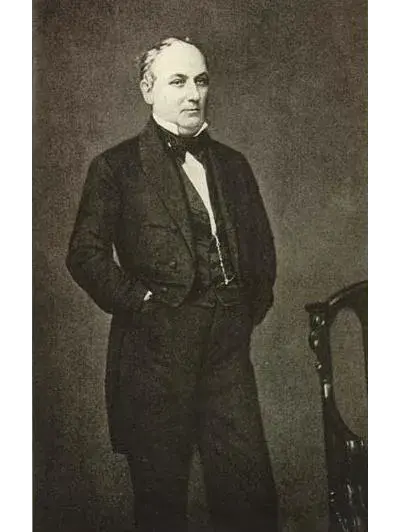
James Henry Hammond was an attorney, politician, and planter from South Carolina. He served as a United States Representative from 1835–36, the 60th Governor of South Carolina from 1842–44, and United States Senator from 1857 to 1860. He was considered one of the major spokesmen in favor of slavery in the years before the American Civil War.
