Louis Leakey Quotes
The majority of people in Angola were not provided with any kind of schooling and were completely illiterate, very badly paid, and treated almost as slaves.
Leakey, Louis S. B. By the Evidence: Memoirs, 1932-1951. Harcourt Brace Jovanovich, 1974.

As a British Loyalist officer, he and his men were dispatched to Savannah, Georgia. There he saw the Southern version of slavery for the first time and was shocked at the cruelty. At the end of the Revolutionary war, he and many other loyalists fled to Canada and began his political career, then representing Britain in the Caribbean. See also {591379}.


Even a cursory reading of the Koran and early Muslim history would show that there were vast inequalities in the economic order long before the ‘imperialists’ were involved in the Middle East. Throughout the Islamic world there has always been the oppressors and the oppressed and inequality has usually been much worse than in the ‘imperialist’ countries.


What is interesting is that when he cites the dreadful facts about American slavery, he never points out that the American slave traders rarely raided the villages and captured the slaves themselves. Most often this was done my Khamenei’s Muslim brethren slave traders who dominated the slave trade in Africa. Nor does he point out what after realizing the evil that Americans perpetrated with slavery, we ended it in the 1860s. Saudi Arabia, the central nation of Islam, did not make slavery illegal until 100 years later, and even today, there are many Saudi’s who get caught practicing slavery with household servants and forms of indentured servitude. And while Christians and the Bible tolerated slavery, the Koran and the Prophet never once condemn the practice of slavery. Democracy at any point in time is not always morally right, but it is a process by which under pressure from the people it improves over time because the people can change it and do.

Abd al-Rahman Ibn Mohammad. He is generally regarded to be the World’s first social scientist. The largest statue in Tunisia of not of a military leader of king, but of this social scientist.


Most Northerners knew little about Southern Slavery and its abject cruelty. The institution was so horrendous that most Northerners tended to think of them as aberrant, unusual occurrences. Speakers fanned out throughout the North disclosing the reality.


This quotation distressed many ultra rightists who otherwise were avid followers of Mises. See {632407} for another quotation that distressed many European conservative devotees of Mises.

Although English, Cobett spent time in America and published a newspaper, The Porcupine Gazette, in Philadelphia. We was very conservative but on the issue of slavery his resembled a liberal point of view. He never used sugar, coffee, or rum because slave labor produced them. However, he advocated legally enslaving lazy people, blacks and whites, who would not work.
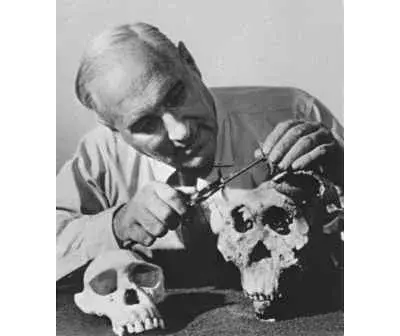
Louis Seymour Bazett Leakey was a Kenyan/British paleoanthropologist and archaeologist whose work was important in demonstrating that humans evolved in Africa, particularly through discoveries made at Olduvai Gorge with his wife, fellow paleontologist Mary Leakey. Having established a program of palaeoanthropological inquiry in eastern Africa, he also motivated many future generations to continue this scholarly work. Several members of Leakey's family became prominent scholars themselves.
