Fidel Castro Quotes
With what moral authority can they [the U. S.] speak of human rights — the rulers of a nation in which the millionaire and beggar coexist; the Indian is exterminated; the black man is discriminated against; the woman is prostituted; and the great masses of Chicanos, Puerto Ricans, and Latin Americans are scorned, exploited, and humiliated?
Fidel Castro, Cuban Premier, Speech on the 25th anniversary of the Moncada Barracks attack, July 26, 1978
Sourced by: Eigen's Political and Historical Quotations


The highway was planned to go through a poor neighborhood which had a high percentage of Black residents—all of whom would have to find other housing and move to make room for the highway. If the government plans a highway through a wealthy area, the cost to condemn and pay for the land will be much greater than if a poor neighborhood is acquired. For urban highways, the poor almost always bear a disproportionate share of the inconvenience while the major benefit inures to the wealthy and middle class. Abbot had been a labor organizer and a professional artist before he entered politics. The graphic is of his famous poster which by itself stopped the plans to build the highway very quickly.


She was one of the first prominent white southerners to denounce racial segregation.


This quotation is interesting for two reasons. First it is a good example of the twisted logic of some of the Slavery apologists who claimed that the Negro slave was better off than the free wage earner. The second reason is that it illustrates the norms of the treatment of the working man before the Civil War. The union movement would change the situation for the free laborer over the next century and then holidays and worker rights became normalized in American society. See {641290} for another of his absurd arguments.
Johnson was then Vice President.


What is interesting is that when he cites the dreadful facts about American slavery, he never points out that the American slave traders rarely raided the villages and captured the slaves themselves. Most often this was done my Khamenei’s Muslim brethren slave traders who dominated the slave trade in Africa. Nor does he point out what after realizing the evil that Americans perpetrated with slavery, we ended it in the 1860s. Saudi Arabia, the central nation of Islam, did not make slavery illegal until 100 years later, and even today, there are many Saudi’s who get caught practicing slavery with household servants and forms of indentured servitude. And while Christians and the Bible tolerated slavery, the Koran and the Prophet never once condemn the practice of slavery. Democracy at any point in time is not always morally right, but it is a process by which under pressure from the people it improves over time because the people can change it and do.


Note that Nixon attributed Rogers views on Blacks to the fact that Roers was from New York City which Nixon viewed as a hotbed of liberals and minorities. This quotation was uncovered in 2010 when more of the Nixon White House tapes were released. Nixon tended to have the worst stereotyped view of all minority groups. The implication of the inbreeding is a high percentage of mental retardation. It was never been established that the Black slaves in America were inbred as they came from many different tribes and slave owners did not attempt to have slaves of a single or even two tribes. There was a great deal of diversity. If anything Southern Whites were in danger of inbreeding as it was the custom for many first cousins to marry. This was just another of Nixon’s hateful, racial remarks based on no foundation of fact.

Parker and other escaped slaves in Christiana fought off slave catchers and killed the slave owner leading them. Charged with treason, he escaped to Canada with his family and lived there the rest of his life. While not a polished writer, after he himself had escaped and went to Christiana and leaned to read and write. He wrote this narrative of his life as a slave—one of the few written works we have from slaves.
She was one of the first prominent white southerners to denounce racial segregation.

Robert Allen Zimmerman
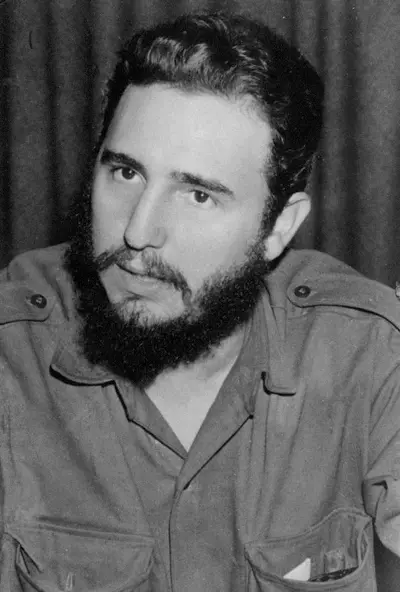
Fidel Alejandro Castro Ruz better known internationally as Fidel Castro, was a Cuban revolutionary and politician who served as Prime Minister of Cuba from 1959 to 1976 and President from 1976 to 2008. Ideologically a Marxist–Leninist and Cuban nationalist, he also served as the First Secretary of the Communist Party of Cuba from 1961 until 2011. Under his administration, Cuba became a one-party communist state; industry and business were nationalized, and state socialist reforms were implemented throughout society.
