Queen Victoria Quotes
With regard to Germany, Prince Metternich is the cause of half the misfortune. His advice was taken by almost all the sovereigns of that country, and it has kept them from doing in time what has now been torn from them with the loss of many rights which they need not have sacrificed.
Metternich, the Chancellor of Austria under the Emperor was a very gifted and imposing diplomat. However he had little vision of the inevitable progress towards democracy and the liberalization of and limitation of the power of monarchs. His advice was on how to be better autocratic monarchs, not on how to reform and he saw no need for absolute monarchy to reform. He advocated press censorship and saw the press as a major enemy. See {630724}. The result was most of the monarchs who took his advice ended up being forced from power or required to cede much of their powers and “rights”. The English monarchs, after their disastrous civil war and its aftermath, in contrast, often led the reform to a constitutional monarchy where the powers and rights of the monarch was defined and limited by a Constitution. Victoria was one of the greatest of the English reforming monarchs, and saw Metternich’s conservatism as responsible for most of the disasters that befell the crowned heads of Europe while she had no such problems. See {607340} for Metternich’s negative view of Constitution.
Victoria Alexandrina, 1819-1901, [Queen Victoria], Queen of Great Britain and Ireland & Empress of India, Letter to her Prime Minister, John Russell, April 16, 1848
Sourced by: Eigen's Political and Historical Quotations


The Russian autocrat found it hard to believe that peasants and merchants could have any rights at all as they did in England. He faulted the female ruler, the great Queen Elizabeth I. By modern standards Elizabeth had awesome power and the English People very little, but Elizabeth was relatively restrained in her use of power and paid attention to the effect of affairs of state had on the people." Ivan the Terrible
"Imperium" is a Latin word which, in a broad sense, translates roughly as 'power to command'. In ancient Rome, different kinds of power or authority were distinguished by different terms "Imperium" referred to the sovereignty of the state over the individual—Wikipedia. The Consul was a wonderful diplomat. He had no respect for the South not only because they were fighting to maintain slavery, but also he found most of their diplomats and officials very incompetent. He found it hard to participate in all the Confederate ceremonies as he was their exhibit number one that they had International Recognition and they "exhibited him frequently. Despite this he was charming and never argumentative about slavery or other political positions that he loathed. As a matter of fact, the Southern Diplomats regarded him as a man sympathetic to the South with an understanding of their point of view. As a result he gained a huge amount of intelligence which he regularly dispatched back to London. England was neutral {35520} in the Civil War, but England did not recognize the Confederacy as a nation, else they would have sent an ambassador. The Southern politicians worked hard to get him to carry their message that if they would be recognized, they would grant England many favorable trade advantages as the English textile industry really wanted Southern cotton. While apparently sympathetic to the Southern cause, his reports contained all the negative information about the South and counseled against recognition just as the English Ambassador in Washington did—see {583131}.

Paine was totally wrong on this count. It is true that monarchy and aristocracy were never the same as they had been, but the American and French Revolutions were catalysts for the monarchs and aristocrats to reform. In a Darwinian sense, monarchy and aristocracy evolved, and the early members would hardly recognize the modern aristocracy of Britain and other European countries that still have them and the Constitutional monarchs of today have almost evolved into a new specie.

This quotation is an excellent example of the attitude of many upper class Englishmen towards the United States in the early part of the 19th century. With the notable exception of Ben Franklin, American Science was undeveloped, and the arts were equally unrefined. However, in assessing the United States, nothing was more derogatory than American Slavery which was totally primitive and barbaric by sophisticated European standards. What is amazing about this quotation was its truth and accuracy which shows us the amazing American development that the United States underwent in the next hundred years when it would be equal to any nation on earth. The American freedom, the abolition of slavery and the brilliance of welcoming immigrants from the world to help develop the free nation produced the greatest country on Earth.


Note that the Queen always used the 3rd person rather than the 1st when referring to herself. This was true of most of the leading public figures in England at the time. Although she detested Gladstone, she gained control of her feelings and did her duty and “sent for” him to form the Government. She was personally delighted when, as she predicted, his government then had political difficulties.


Actually, these revolutionists were quite moderate and what they wanted was his abdication and for him to go to England but they used the fear of trial and beheading to induce him to leave rather than have a pitched battle. He did.

She responded to the Lord Chief Justice and to Lord Cecil and asked them to so inform the Commons and the House of Lords. Cecil needed three drafts to convey the response but tone it down a little, thus performing the duties of a modern press secretary.

Lotario de' Conti. The Pope did not want anything to diminish the absolute power of Kings as Popes might be next to lose their absolute authority. Despite the Pope’s nullification, Magna Carta had huge influence in England and the world. Note that the Pope actually called the agreement “unjust”, which gives us an excellent idea of the concept of justice amongst the power elites of the 13th century.

Lord Dunsmore was John Murray, 1732-1809, the Royal Colonial Governor of Virginia who was one of the least competent of the British officials in Colonial America.

Blair was then the leader of the opposition Labor party. Major, the prime minister, did not have firm control of his own party and was whipsawed between different factions. He was ousted by his own party, not by losing an election.
Many American colonists had relatives and friends in England, and Paine argued that American independence would help and not het the English people.


1st Earl of Oxford. While clearly a gross overgeneralization, the Austrian leadership were in the process of making some very stupid policy decisions that led to WW I and the destruction and breakup of their empire.


This quotation is important for two reasons. First, this is one of the most negative attacks on an opponent in a Presidential election in all of American History—to call the opponent ‘dangerous’ to the nation. Second, it is a classic example of two close political friends and allies, after a falling out. Roosevelt had in effect made Taft President in 1908, but Roosevelt was extremely disappointed as Taft was controllable by the Republican Party bosses, who hated Roosevelt. TR then challenged the then sitting President for the Republican Presidential nomination. At that time there were 12 states that had primary elections and Roosevelt won 9 of them. La Follette won 2 and Taft only 1. The majority of the states did not then have primaries allowing the party bosses to make the decision of which candidate to support. Party leaders generally did not like Roosevelt who was a major reformer, so they voted for Taft at the convention pushing him over the top when he clearly was the less popular of all 3 candidates. Roosevelt, outraged by the party bosses overriding the will of the people, then walked out of the convention and organized his own convention and TR ran as the Progressive Party (Bull Moose Party). In the general election Roosevelt got more votes than Taft, but the two of them had split the majority Republican vote and the Democrat, Woodrow Wilson was the winner.


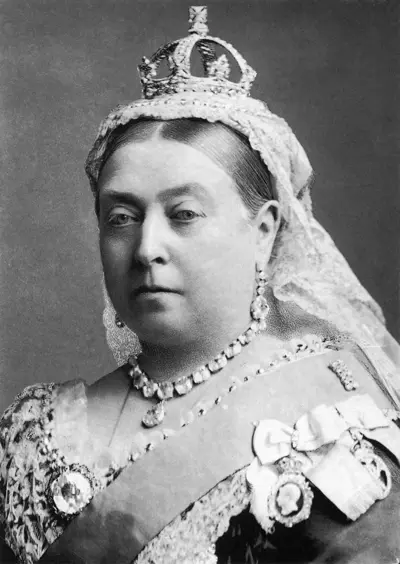
- Born: May 24, 1819
- Died: January 22, 1901
- Nationality: British
- Profession: Royalty
Victoria was Queen of the United Kingdom of Great Britain and Ireland from 20 June 1837 until her death in 1901. Known as the Victorian era, her reign of 63 years and seven months was the longest of any British monarch until surpassed by that of Elizabeth II. It was a period of industrial, political, scientific, and military change within the United Kingdom, and was marked by a great expansion of the British Empire. In 1876, Parliament voted to grant her the additional title of Empress of India.
