Sydney Smith Quotes
In the four quarters of the globe, who reads an American book? Or goes to an American play? or looks at an American picture or statue? What does the world yet owe to American physicians or surgeons? What new substances have their chemists discovered? Or what old ones have they advanced? What new constellations have been discovered by the telescopes of Americans? Who drinks out of American glasses? Or eats from American plates? Or wears American coats or gowns? or sleeps in American blankets? Finally, under which of the old tyrannical governments of Europe is every sixth man a slave, whom his fellow-creatures may buy and sell and torture?
This quotation is an excellent example of the attitude of many upper class Englishmen towards the United States in the early part of the 19th century. With the notable exception of Ben Franklin, American Science was undeveloped, and the arts were equally unrefined. However, in assessing the United States, nothing was more derogatory than American Slavery which was totally primitive and barbaric by sophisticated European standards. What is amazing about this quotation was its truth and accuracy which shows us the amazing American development that the United States underwent in the next hundred years when it would be equal to any nation on earth. The American freedom, the abolition of slavery and the brilliance of welcoming immigrants from the world to help develop the free nation produced the greatest country on Earth.
Sydney Smith, 1771-1845, English Clergyman & Essayist, "Review of Seybert’s Annals of the United States", The Edinburgh Review, 1820
Sourced by: Eigen's Political and Historical Quotations


Akhito, then a very young man, had been under the tutelage of imperial and military men chosen for the task. Their racism and conviction of Japanese innate superiority persists to this day among many of the Japanese right.


Very few countries make such overt recognition of the arts and their cultural heritage a part of their constitutions. Even nations which are fanatic about their cultures such as France do not have such overt constitutional provisions.

Metternich, the Chancellor of Austria under the Emperor was a very gifted and imposing diplomat. However he had little vision of the inevitable progress towards democracy and the liberalization of and limitation of the power of monarchs. His advice was on how to be better autocratic monarchs, not on how to reform and he saw no need for absolute monarchy to reform. He advocated press censorship and saw the press as a major enemy. See {630724}. The result was most of the monarchs who took his advice ended up being forced from power or required to cede much of their powers and “rights”. The English monarchs, after their disastrous civil war and its aftermath, in contrast, often led the reform to a constitutional monarchy where the powers and rights of the monarch was defined and limited by a Constitution. Victoria was one of the greatest of the English reforming monarchs, and saw Metternich’s conservatism as responsible for most of the disasters that befell the crowned heads of Europe while she had no such problems. See {607340} for Metternich’s negative view of Constitution.
Czar Nicholas II was a relative of Queen Victoria and her uncle, King Leopold. They were both skilled and popular monarchs. In contrast, the Czar was not only hated by his own people, but as this private letter shows, was not thought very well of by his own more accomplished relatives and fellow monarchs. Nicholas II was so bad, that he was the last of the Czars as the Communist Russian Revolution forced him to abdicate and then he was murdered.


Bourne was one of the first writers with a national audience to question the classic but never real “melting pot” theory of immigration and suggest the “salad” model though he never used the term.


His views are a mix of modernism and fundamentalism. He favors democracy and elections but also favored the Taliban destroying the great ancient Buddha statues when he was called an idol worshipper for urging the preservation of art.

What was particularly interesting about this quotation is that Pinkney was a political leader of Maryland, a slave state. See {632258} and {632257} for more on this point.

1st Baron Macaulay. In reality neither politics nor political science is yet a true science. And it has not developed to the same degree that the physical sciences which utilize mathematics have done.


When Callaghan became Prime Minister in 1976, he had to deal with the Leader of the Opposition, Margaret Thatcher. This arrogant remark is typical of Callaghan’s style when dealing with her.


He was born in the Azerbaijan province of the Soviet Union and did most of his academic work in the United States. He is an example of a globalized scientist.

There has never yet been created a sound method of determining value of intangibles. This is what limits the value of economics to politics. Cost-benefit analyses are not very useful if there is no way to measure the benefit such as Newton’s discoveries.
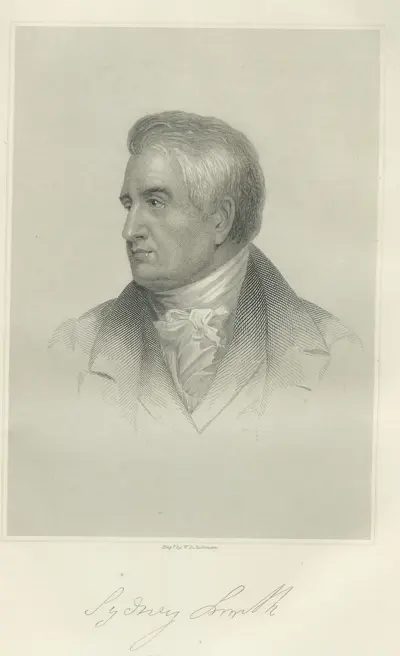
Sydney Smith was an English wit, writer and Anglican cleric.
