Queen Victoria Quotes
He is stern and severe—with fixed principles of duty which nothing on earth will make him change; very clever I do not think him, and his mind is an uncivilized one; his education has been neglected; politics and military concerns are the only things he takes great interest in; the arts and all softer occupations he is insensible to, but he is sincere, I am certain, sincere even in his most despotic acts, from a sense that that is the only way to govern; he is not, I am sure, aware of the dreadful cases of individual misery which he so often causes, for I can see by various instances that he is kept in utter ignorance of many things, which his people carry out in most corrupt ways, while he thinks that he is extremely just.
Czar Nicholas II was a relative of Queen Victoria and her uncle, King Leopold. They were both skilled and popular monarchs. In contrast, the Czar was not only hated by his own people, but as this private letter shows, was not thought very well of by his own more accomplished relatives and fellow monarchs. Nicholas II was so bad, that he was the last of the Czars as the Communist Russian Revolution forced him to abdicate and then he was murdered.
Victoria Alexandrina, 1819-1901, [Queen Victoria], Queen of Great Britain and Ireland & Empress of India, Letter to Her Uncle, King Leopold of Belgium assessing Russian Czar Nicholas II, From Buckingham Palace, June 11, 1844
Sourced by: Eigen's Political and Historical Quotations

What is fascinating about this quotation is that England itself was an aristocracy with a monarchy and very few elements of fairness and equality. The aristocracy and the monarch very much used the system and the common people for their benefit. However, the degree of abuse and tyranny and absence of any sense of equity, shocked even this English aristocrat. Behoof was a Middle English word derived from words that mean to profit from. By the time he used it, it meant benefit or advantage—a slightly wider meaning, but even in 1591 it was not a commonly used words but one used more by the intelligentsia of the day.

The Russian autocrat found it hard to believe that peasants and merchants could have any rights at all as they did in England. He faulted the female ruler, the great Queen Elizabeth I. By modern standards Elizabeth had awesome power and the English People very little, but Elizabeth was relatively restrained in her use of power and paid attention to the effect of affairs of state had on the people." Ivan the Terrible

He was expelled from Parliament for such.

This quotation is an excellent example of the attitude of many upper class Englishmen towards the United States in the early part of the 19th century. With the notable exception of Ben Franklin, American Science was undeveloped, and the arts were equally unrefined. However, in assessing the United States, nothing was more derogatory than American Slavery which was totally primitive and barbaric by sophisticated European standards. What is amazing about this quotation was its truth and accuracy which shows us the amazing American development that the United States underwent in the next hundred years when it would be equal to any nation on earth. The American freedom, the abolition of slavery and the brilliance of welcoming immigrants from the world to help develop the free nation produced the greatest country on Earth.

Mark Twain referring to and reflecting on his encounter with the Sultan of Turkey, Abdul Aziz.


This quotation is interesting for two reasons. First, this is one of the most severe criticisms of a cabinet and ministers in English history. The second reason of interest is that it was these same ministers who made the policies and the decisions that would bring on the American Revolution. Were it not for the incompetence, there might not be a United States today. Pitt’s son later also castigated the ministers. See {641503}.


1st Earl of Oxford. While clearly a gross overgeneralization, the Austrian leadership were in the process of making some very stupid policy decisions that led to WW I and the destruction and breakup of their empire.


The “Dutchman” referred to the Boer population of South Africa. See {583922} for a Dutch similar assessment and {583929} for another similar Engish view.

See {583928} and {583922}

The Greeks committed many atrocities in their war with Turkey. See {584483}


Fremont and some of the Radical Republicans wanted Lincoln immediately to declare the slaves of the rebelling states free. As a major general in charge of an area, he wrote a military order emancipating all the slaves in his jurisdiction. President Lincoln countermanded the order as soon as he found out. He wanted Fremont to only free the slaves whose owners were actively working against the union. Lincoln needed to hold the border states like Maryland in the Union and was working on a plan whereby slave owners who were loyal to the Union would be economically compensated when their slaves were freed. If loyal slaveholders in Fremont’s area would lose their slaves with no compensation, Lincoln feared that the otherwise loyal border states would be driven to the confederacy thus shifting the balance of power. Lincoln had his own plan for emancipation and would not allow Fremont to alter that. As a result of this speech, the Radical Republicans nominated Fremont to run against Lincoln. For a few weeks he looked like he would run, but then he and Lincoln made a deal. Lincoln fired Montgomery Blair, Fremont’s arch enemy, from the cabinet, and Fremont withdrew from the election.


Blair had just led his party to its third successive election win—a new record for that party. Galloway, had campaigned against Blair and the Labor Party and had beaten the Labour MP in his district which was predominantly Muslim and had been vehemently opposed to the Iraq War.

First woman to receive the British Order of Merit. Nightingale was a great and prolific writer, and nothing attracted her ire worse than bureaucracy. See {614057}.
Samuel Langhorne Clemens, 1835-1910


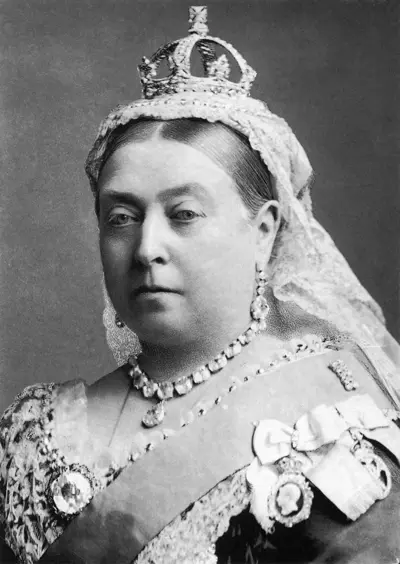
Victoria was Queen of the United Kingdom of Great Britain and Ireland from 20 June 1837 until her death in 1901. Known as the Victorian era, her reign of 63 years and seven months was the longest of any British monarch until surpassed by that of Elizabeth II. It was a period of industrial, political, scientific, and military change within the United Kingdom, and was marked by a great expansion of the British Empire. In 1876, Parliament voted to grant her the additional title of Empress of India.
