Nathan Meyer Rothschild Quotes
Who controls the issuance of money controls the government!


At the time, there was no United States currency. Private banks in some of the states issued their own money. A dollar from Georgia might only be worth 75 cents in New York.


The last sentence echoes a quotation of Napoleon. See {630664} .


The ‘Fed’ refers to the Federal Reserve Board, the strength of which lies in its independence from politics. Some, however, believe that there should not be any entity that performs a major function in our society which is not accountable to the Executive Branch or the Congress or both.

At the time any private bank could issue their own money. Private sector bankers thought it outrageous that the Congress should consider trampling on their rights to issue money. The solution that was finally adopted some years later was to use the Federal Reserve Board to control the money supply. It is independent of the Congress and the President but members are appointed by the President and confirmed by the Senate. Our system, like no other system, is a compromise where neither the Government or the Private Sector controls the American money supply.


Roosevelt saw to it that the contents of the telegram was shown to the press. Then this statement was seen by the foreign delegates who viewed themselves as ‘international bankers”. They were outraged and the conference blew up with no significant action taken. Roosevelt was desperately trying to lead America out of the Great Depression which Herbert Hoover had left him with. The dollar had been falling in value since the 1929 crash and one of the likely outcomes of the conference was European and other nations putting a plan together to stop the fall of the dollar. FDR however, wanted the dollar to continue to fall. This would make it harder for Americans by buy imported products, but easier to employ more Americans making products for export. The people hurt most by The Depression did not buy any imported products, and what they needed was food, housing, clothing, education and medical care, none of which would be affected by a weaker dollar and more expensive imports. However, he did not want a political argument with the wealthy and upper middle class who wanted cheaper imports, so some people believe that he made it seem that he had committed a diplomatic blunder and that caused the conference to collapse.

See {583710} for his grandchild’s variation.


Attempting to defend charges that his bank and others were engaged in monopolistic practices:


The very act of printing money created a debt—at the time and until the Nixon Administration which went off the gold standard—the government owed the gold or silver and the spicie—the printed money—was a promissory note.

This is a very interesting quotation in that it is one of the first suggestions that money debasement can be caused by a lack of trust and confidence in the government rather than the percentage of precious metals in the coins.


This is an oft quoted statement because of the Great Depression which occurred the following year after Strong had passed away. The Federal Reserve followed the lead of President Hoover and did nothing while they watched the nation’s money supply shrink a third over the next 3 years, making a business comeback very difficult. If Strong had lived longer, he might have persuaded the others to increase the money supply and act as the nation’s safety valve. As the President of the New York Bank, he was the first among equals.

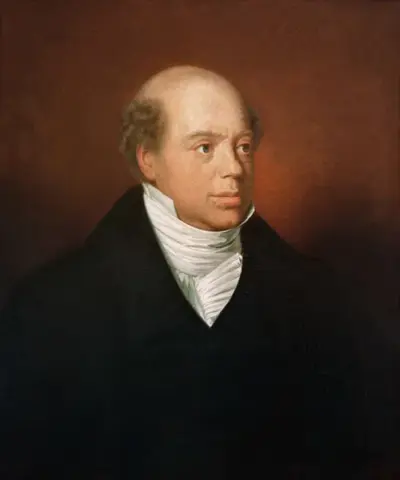
Nathan Mayer Rothschild was a German Jewish banker, businessman and financier. Born in Frankfurt am Main in Germany, he was the third of the five sons of Gutle (Schnapper) and Mayer Amschel Rothschild, and was of the second generation of the Rothschild banking dynasty. Like his four brothers, he was from 1822, the Nathan Mayer, Freiherr von Rothschild, an Austrian Baron; however, he never used the title. Once the wealthiest man on earth, he was the richest among the Rothschilds.
