Robert Peel Quotes
When the honourable member is gratified by seeing the sovereign of his choice on the throne of these realms, I hope he will enjoy, and I am sure he will deserve, the confidence of the Crown
2nd Baronet Peel
Robert Peel, 1788-1850, British Prime Minister (Tory), Putdown of Fergus O'Connor, a Chartist MP and a personal enemy of King William's
Sourced by: Eigen's Political and Historical Quotations

In 1628 Parliament, in response to abuses by King Charles I, was about to pass The Petition of Rights–-a type of Bill of Rights. The King gave assurances that the practices—such as forcing nobles to lend him money—would not continue and didn't want to be embarrassed by passage of a law which he claimed would indicate that the Parliament did not trust him and weaken the dignity of the monarchy. The Petition of Rights passed with Cole’s leadership.


She responded to the Lord Chief Justice and to Lord Cecil and asked them to so inform the Commons and the House of Lords. Cecil needed three drafts to convey the response but tone it down a little, thus performing the duties of a modern press secretary.

This was written shortly before he assumed the crown.


Note that the Queen always used the 3rd person rather than the 1st when referring to herself. This was true of most of the leading public figures in England at the time. Although she detested Gladstone, she gained control of her feelings and did her duty and “sent for” him to form the Government. She was personally delighted when, as she predicted, his government then had political difficulties.
Metternich, the Chancellor of Austria under the Emperor was a very gifted and imposing diplomat. However he had little vision of the inevitable progress towards democracy and the liberalization of and limitation of the power of monarchs. His advice was on how to be better autocratic monarchs, not on how to reform and he saw no need for absolute monarchy to reform. He advocated press censorship and saw the press as a major enemy. See {630724}. The result was most of the monarchs who took his advice ended up being forced from power or required to cede much of their powers and “rights”. The English monarchs, after their disastrous civil war and its aftermath, in contrast, often led the reform to a constitutional monarchy where the powers and rights of the monarch was defined and limited by a Constitution. Victoria was one of the greatest of the English reforming monarchs, and saw Metternich’s conservatism as responsible for most of the disasters that befell the crowned heads of Europe while she had no such problems. See {607340} for Metternich’s negative view of Constitution.


The Continental Congress told each colony should establish its own republican government quickly so that the people did not have to depend on England for anything, and that the English Monarchy be opposed and supplanted anywhere where they wanted to exercise authority.


Some of the Patriots of Early America realized that the oppressions of British rule were coming from Parliament and initially took the position that only the King could make laws for the colonies and not Parliament. Therefore, they were as Englishmen challenging illegal English laws. Most American hostility was directed at Parliament and not the King. However, once there was any physical resistance, King George came down with such a heavy hand that American hatred transferred to him. For related quotes on the King/Parliament issue, see {639145}, {639143}, {639142}, {639141}, {639140}, & {639137}

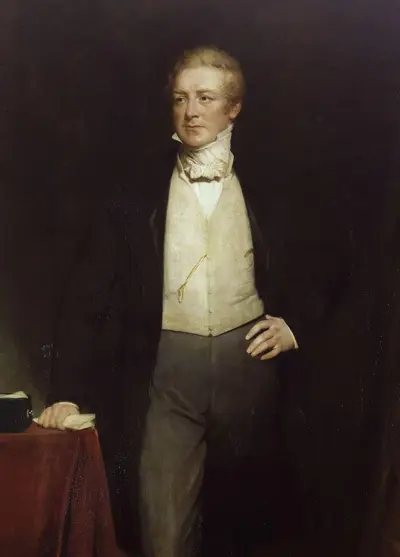
Sir Robert Peel, 2nd Baronet, FRS was twice Prime Minister of the United Kingdom (1834–1835 and 1841–1846) and twice Home Secretary (1822–1827 and 1828–1830). He is regarded as the father of modern British policing, owing to his founding of the Metropolitan Police Service. Peel was one of the founders of the modern Conservative Party.
