Margaret Thatcher Quotes
What happened in Russia in 1917 wasn't a revolution - it was a coup d'etat.
Thatcher, Margaret. Statecraft: Strategies for a Changing World. HarperCollins, 2002.

Lenin, Uritsky, and other Bolshevik leaders were attacked in 1918. Lenin was wounded but Utrtsky died, and this triggered the attacks on the other Russian factions by the Bolsheviks known as the “Red Terror.”


New York Times Russian correspondent was commenting on the prognosis for the Russian revolution:


In 1921 an Paul E. De Mott, an American Quaker famine relief worker in Germany was arrested as a "Bolshevik" and murdered without trial. American correspondents heard about the crime and asked for a statement from the chief American diplomat in Germany.

This was one of the first of the world communist leaders who had concluded that the Russian communist state and its revolution had failed. Russia of 1923 was perceived as too dictatorial and not democratic enough. At the same time they thought Russia had not only sold out the democratic nature of communism but also the economic as well by having too much private property and making economic deals with Western capitalists giving concessions of all kinds to Krupp and other major Multinational companies to try and develop international trade and investment. Politically the communist critics thought Russian communism too left wing and undemocratic and economically too right wing and capitalistic.


1st Earl Lloyd-George of Dwyfor. This turned out to be one of the worst predictions in political history.

Vladimir Lenin. This galvanized the October Revolution which put the Bolsheviks in power ousting the Kerensky government.


20th century Africa and South America were particularly good examples.


While the intelligence apparatus of Great Britain and America completely missed the collapse of the Soviet Union, one man, Levin, clearly predicted it. This quotation is from that article.


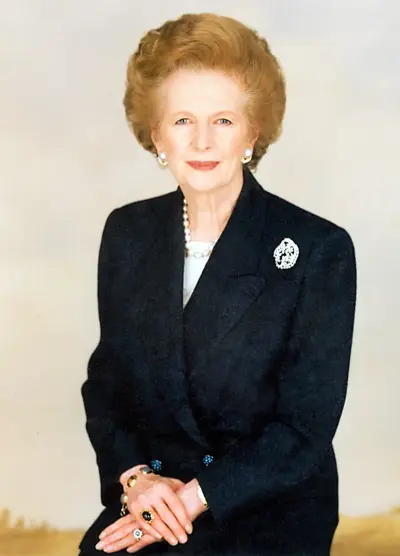
Margaret Hilda Thatcher, Baroness Thatcher, LG, OM, DStJ, PC, FRS, HonFRSC was a British stateswoman who served as Prime Minister of the United Kingdom from 1979 to 1990 and Leader of the Conservative Party from 1975 to 1990. She was the longest-serving British prime minister of the 20th century and the first woman to hold that office. A Soviet journalist dubbed her the "Iron Lady", a nickname that became associated with her uncompromising politics and leadership style. As prime minister, she implemented policies that became known as Thatcherism.
