Ida Tarbell Quotes
We, the people of the United States, and nobody else, must cure whatever is wrong with the industrial situation, typified by this narrative of the Standard Oil Company.
She had done a monumental exposé of the Standard Oil Company illegal and immoral activities. The public was so aroused that many reforms were instituted and the Standard Oil Company Trust was broken up into many smaller companies. Tarbell was then, in the words of S. S. McClure, “the most famous woman in America.”
Ida Tarbell, 1857-1944, Journalist & Deputy Secretary of State (Democrat), “The Price of Oil”, McClure’s, September 1904
Sourced by: Eigen's Political and Historical Quotations

One important observation of this quotation is the pejorative language Mises used to describe “Union Bosses” as opposed to “Union Leaders.” There were indeed a few Union “Bosses” but most unions had popularly elected leaders. It is similar to the left wing critic who refers to Corporate Executives as “Greedy Monopolists.” A few are but most are not. Historically, in the last half of the 20th century and the beginning of the 21st, the conservatives tended to be much better at pejorative language and used it more frequently and uniformly than the liberals who tended to be better in the last part of the 19th century and the first half of the 20th century.

The “rebate agony” referred to a corrupt practice of the Railroads and the Large Monopolies. The railroads charged a very high rate for the transportation of important products like beef and oil. However, secretly they gave back a large percentage of the transportation rate charged to the trusts. They in turn could cut their prices and undersell all the smaller competitors who were paying “full freight” and could not afford to match the lower price. As soon as the smaller competitors were driven out of business in an area, the trust raised its rates even higher than they charged originally. The Railroad had made a small but reasonable profit on the freight of the trusts but they were guaranteed all their business. They also made huge profits on the higher rates that the small companies paid until those companies were driven out of business. Journalists like Ray Baker and Ida Tarbell had uncovered the rebate scheme which enabled the trusts to steal high amounts from the general public through unreasonably high prices. President Theodore Roosevelt was committed to try and regulate the railroads and not allow rebates but charge the same public rate to all with no rebates. Socialists like Sinclair, thought that this attempt would be hopeless—that the damage had already been done, and the trusts now had so much money that they could buy state legislatures and many in Congress to preserve their dominance.

Webster was taking regular bribes from large corporations and even complained when his payments were late. So he might have had a pro-large business bias. At the time taking bribes even if there was a quid pro quo was not illegal or even “unethical” by then Congressional rules.


His last speech before his appointment to the court.

While Roosevelt was considered a radical by ultra-conservatives, he was actually considerably to the right of William Jennings Bryan, the Democrats, and most of the populists of day who wanted much more draconian solutions to the abuses of corporations.


The best examples are Social Security and Medicare.


The State Department has always been reluctant to have the US Government make an official condemnation of the Turkish. Prior to the end of WWI. Turkey’s Ottoman Empire controlled most of the Middle East which was discovered to be full of oil. Armenia had no oil. The State Department since then (and until the 1970s) it has made it a top priority to advocate for Standard Oil and other American oil companies with the Turks and then the Arabs regardless of the morality of the situation. Despite the fact that virtually every American leader wanted to advocate for the Armenians, the State Department held fast to not
upset Turkey about the Armenian Genocide. Cardashian was the first American who openly stated what the real motivation was. See {638251}, {620602}, {620603}, {620604}, {620605}, and {620606}

The only previous source of light in America had been whale oil or candles—both very expensive. Oil was discovered in Pennsylvania and refinery techniques developed to produce Kerosene. (Gasoline was too explosive and dangerous for home use.) Everyone’s standard of living depended on Kerosene at the time and John D. Rockefeller controlled the price everywhere except New York. There were no monopoly or antitrust laws when he gobbled up his competitors and he rapidly became the richest man in America and one of the most hated. His abuse of the system at the time led to the government regulation of monopolies and the antitrust laws. It was very courageous for the Atlantic Monthly to publish this article, as Rockefeller’s power extended all over the nation—but less in New York where the magazine was published.


The representative was opposing currency and monetary reform that would have given Wall Street too much power. His son, the famous aviator, was a Fascist who was a great admirer and supporter of Hitler and Mussolini. The father however was generally liberal as this quotation and {609656} illustrate.

The Kimberly and Comstock lodes were natural deposits of copper and silver so close to the surface that it required very little work to remove the metal and sell the it.


Grandfather of President John F. Kennedy. Standard Oil had a monopoly on kerosene, a major fuel at the time. The company announced an extra $17 million dividend to shareholders and then raised the price of kerosene throughout the country to pay for it. Some, like Fitzgerald, saw this as a de facto regressive tax levied by a private corporation on the poor and middle class.

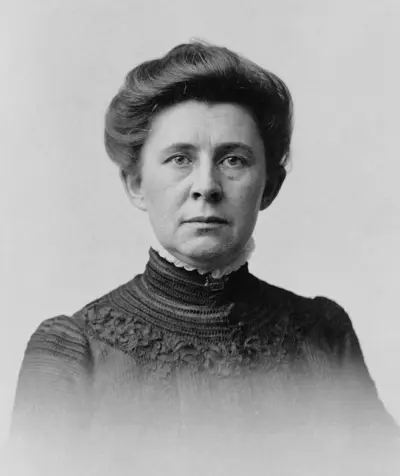
Ida Minerva Tarbell was an American writer, investigative journalist, biographer and lecturer. She was one of the leading muckrakers of the Progressive Era of the late 19th and early 20th centuries and pioneered investigative journalism. Born in Pennsylvania at the onset of the oil boom, Tarbell is best known for her 1904 book The History of the Standard Oil Company. The book was published as a series of articles in McClure's Magazine from 1902 to 1904. It has been called a "masterpiece of investigative journalism", by historian J. North Conway, as well as "the single most influential book on business ever published in the United States" by historian Daniel Yergin. The work would contribute to the dissolution of the Standard Oil monopoly and helped usher in the Hepburn Act of 1906, the Mann-Elkins Act, the creation of the Federal Trade Commission (FTC) and the Clayton Antitrust Act.
