Benjamin H. Hill Quotes
I do not dread these corporations as instruments of power to destroy this country, because there are a thousand agencies which can regulate, restrain and control them.
Benjamin H. Hill, 1823-1882, U.S. Congressman & U.S. Senator (Democrat, GA), Senator in the Confederate Congress, Senate Debate, March 27, 1878
Sourced by: Eigen's Political and Historical Quotations

During The Depression although business in general was doing very poorly, there were a few which had grown immensely powerful and abused the power as there was little or no regulation at the time.


TR came from a wealthy, upper class family, and because of his position favoring regulation of corporations he was called a traitor to his class by many.
This statement demonstrated the classic difference that Roosevelt had with the right wing of his party and that of the contemporary Republican party. Namely they thought that the only obligation of the corporation of other business was to the owners / shareholders while Roosevelt saw the obligation to the State and the people. The State and the society gives corporations many privileges that normal businesses do not have—most important is limited liability for the corporation’s negligence or even intentional damage to people. If the Corporation had no obligation to the State and to the people, why should they get this limited liability and other benefits?

The Chief Justice refused to accept the previously established legal precedents of other states which would limit considerably the right of the state to regulate corporations. As a result Wisconsin became one of America’s pioneers in regulating corporations which over 25 years later, Theodore Roosevelt was to do for the nation as a whole. The phrase “empire within an empire,” the translation of the Latin that Ryan used, has often been quoted to describe the power corporations had at that time.


The President had decided to aggressively push for railroad regulation to end the rate rebate abuses that were used to support the monopolies like Standard Oil. In vintage Roosevelt tactics, he gave his first major speech on the subject in the setting and forum that would be most opposed to it. The Union League Club of Philadelphia in included the wealthiest men in the area where were most opposed to any Federal Regulation of anything. All the major railroad executives and stock owners and traders were also members. The President wanted to persuade the opponents to change their positions, and sometimes he did. He also was driven by his concept of sports and athletics so that the “opposition” should have “fair notice” for the contest ahead.


To the modern reader utterances such as this from a Conservative Prime Minister seem astounding. However, the Great Depression existed in Canada as well as the United States, and Franklin Delano Roosevelt was not the only world leader who would reach the conclusion that business and capitalism must be profoundly regulated and the system changed if it was to be saved.


This extreme view of regulation is one of the many views that caused the Nevada voters to reject her.
Federal regulation of corporations involved in Interstate Commerce was then a “radical new notion”.
Actually, both political parties had a range of opinion on the issue of control of the trusts, monopolies and large corporations. Roosevelt and his liberal wing of the Republic opinion were for regulating corporations and strengthening and enforcing the anti-trust laws. However, many of his party refused to admit that there were any abuses and/or if there were, the effect of Federal regulation and anti-trust enforcement would be worse that then problems caused by the trusts. At the same time, the Democrats had Bryan’s wing that wanted to break up the trusts and large corporations, and that is why Roosevelt had so much public support—enough to pass the legislation and make the President’s initiatives very popular. Roosevelt a shrewd campaigner attacked the Democrats knowing full well that many agreed with him, and ignored the conservative wing of his own party who were the ones who actively opposed his corporate reform effort.

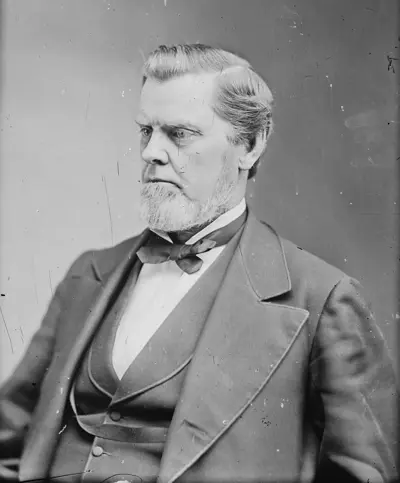
Benjamin Harvey Hill was a politician whose career spanned state and national politics, and the Civil War. He served in the Georgia legislature in both houses. Although he had opposed secession, he stayed with the South and served as a Confederate senator representing Georgia.
