Edward G. Ryan Quotes
To follow the example of other states would deprive Wisconsin of a large measure of its sovereign prerogative, and establish great corporations as independent powers within the state, a sort of imperia in imperiis (empire within an empire), baffling state order, state economy, state policy.
The Chief Justice refused to accept the previously established legal precedents of other states which would limit considerably the right of the state to regulate corporations. As a result Wisconsin became one of America’s pioneers in regulating corporations which over 25 years later, Theodore Roosevelt was to do for the nation as a whole. The phrase “empire within an empire,” the translation of the Latin that Ryan used, has often been quoted to describe the power corporations had at that time.
Edward G. Ryan, 1810-1880, Chief Justice of the Wisconsin Supreme Court, 1874
Sourced by: Eigen's Political and Historical Quotations


This is a very important historical quotation because it clearly stated the left wing view of regulation. Large Business had been so unethical and illegal at the time that the majority of Americans and Congress, together with a Republican President, thought that it would be good to “weld” the growth and development of large companies to the Government. The right wing saw this as extreme Communism. Over time, when corporate greed and excesses had been controlled by government and was not as prevalent, the inhibition on growth and development of welding corporations to Government was recognized and a period of deregulation followed with most Americans not wanting to allow large companies to be completely deregulated and also not wanting them welded to the government. The extent of regulation has been the political contest with the extreme left and extreme right still holding to their ideological positions and sometimes paralyzing the middle as in the Obama administration.

During The Depression although business in general was doing very poorly, there were a few which had grown immensely powerful and abused the power as there was little or no regulation at the time.


This Republican mantra has been central for the Republicans for the entire century after Theodore Roosevelt who thought that business had to be regulated and controlled. The same basic speech has been given by conservative Republicans ever since.


The construction and operation of Federal lighthouses and Post Office facilities was accepted, but at the time there were no Federal roads or canals. Some thought that the development of these would be good for the economic development of the country. Jackson and most other politicians could not even conceive of such a thing. However, creative legislators of future generations would create a legal framework for having private, local, state and Federal roads and canals all coexisting. This quotation also dramatically illustrates the problem the Federal Courts would have later when the Constitutionality of Federal Regulations of Billboards on Federal Highways would arise. Not only had the Founding Fathers never conceived of Federal roads, but they never imagined billboards. Yet the Supreme Court had to determine the intent of the Framers regarding billboards on Federal roads.

This statement demonstrated the classic difference that Roosevelt had with the right wing of his party and that of the contemporary Republican party. Namely they thought that the only obligation of the corporation of other business was to the owners / shareholders while Roosevelt saw the obligation to the State and the people. The State and the society gives corporations many privileges that normal businesses do not have—most important is limited liability for the corporation’s negligence or even intentional damage to people. If the Corporation had no obligation to the State and to the people, why should they get this limited liability and other benefits?

in the Meltdown of 2008 Gramm was one of the most ideological deregulators in Congress. As the Meltdown of 2008 hit, he immediately made this statement when few people even knew the extent of what had happened, much less why it happened. Gramm’s instant absolution of deregulation as one of the causes is a classic case of denial. There were few economic issues of controversy that did not contribute to the totality of causes. And a few years later Gramm was one of the very few ideologues who still believed that deregulation did not have a role in the Meltdown and the Great Recession that followed. For a contrast from the expert in his own party, see {638023}.
Federal regulation of corporations involved in Interstate Commerce was then a “radical new notion”.

The commercial special interests, together with the banks had become a very dominant force in society just as before the Great Depression in 1929 and the Great Recession in 2008.


This was the origin of the term "military-industrial complex." This speech was written by Malcolm Moos who first penned the term. However, conceptually it was referred to earlier by C. Wright Mills in 1954— {623497}.


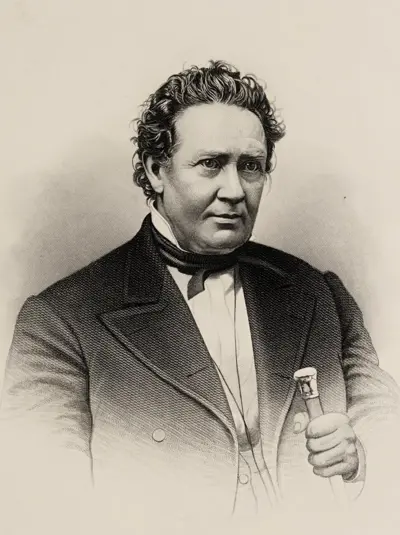
Edward George Ryan was an Irish American immigrant, lawyer, and judge, and was the 5th Chief Justice of the Wisconsin Supreme Court.
