William H. Sumner Quotes
… undisciplined, badly armed, miserably provided and worse commanded.”,,,,, Sumner could see no way of implementing a command agreement except by using force, which meant using militia against militia
This differed from his public statements where he extolled the militia {613331}, the politically popular thing to do. No wise politician would publicly criticize his own State’s militia.
William H. Sumner, 1780-, Adjutant General of Massachusetts, Acting Governor of Massachusetts, Opinion of the Performance of the Massachusetts State Militia in the Defense of Portland, September 1812, Quoted in Donald R. Hickey, The war of 1812: A forgotten conflict, 1990
Sourced by: Eigen's Political and Historical Quotations

This was his political speech about the importance of the state militia. However, in the War of 1812 in September the British attacked and burned the town of Portland which the militia feebly tried to defend. See his private view then: {613332}.

He lost the vote on this issue, and the Congress created the first committee to investigate and oversee military affairs.

There were more than 100 million of his gun distributed over the world and his invention has been the instrument by which more people have been killed than any other weapon.

Morgan had just left his appointment at Annapolis and traveled to the then Confederate capital, Montgomery, AL to volunteer for the Confederate navy.


There is a , romantic American myth about the Militiamen in Colonial and Revolutionary America—the citizen soldiers who would leave their farms and rise to the military necessity of the day. However, not only were the militia very hard to muster to duty, but most actually didn’t own or have experience with firearms, and the prevailing opinion of knowledgeable military leaders from George Washington on down was that the militia were not very good soldiers. See {613015}, {613016}, {613022}, {613027}, {621987}, {621988}, {613030}, {613033}, & {613056}

While running for office he was trying to win the support of Republcian Conservatives who were very unhappyt with their percieved lack of progress in fighting ISIS. However, this was insulting to many military people--especiually since ISIS was being deprived of they sources of funding and oil trade, their leaders were being killed at a rapid rate, and they were losign most of their territory. After he won the Presidency, on the very night of his inaguration he then flip flopped and paraised the general leadship of the military. While most politicans had a certain degree of hypocricy, Trump could make totally contrdictory statements without any embarassment. See Quote 644331..

More than a decade before Hamilton wrote this, a Maryland commission used the phrase “well regulated militia” earlier. (See {588394}.) It would be less than 2 years before the phrase “well regulated militia” would be added into the Constitution in the 2nd Amendment of the Bill of Rights—September 25, 1789. The Maryland resolution was the last of several passed at a meeting by which Maryland endorsed resistance to the British before the actual Revolution. So these resolations would have been widely distributed throughout the colonies and known by the leaders. Whether the drafters of the 2nd Amendment got the phrase from Hamilton’s Federalist 29 or from the Maryland Resolutions is not known but Hamilton’s was much more current. Did he get the phrase from Maryland? Did Congress get it from him? Did Maryland originate the phrase or was there an earlier use that influenced the Maryland drafters? At this point no one is sure, but the phrase is critical to the meaning of the 2nd Amendment because the Supreme Court has repeatedly held that the Second Amandment does not apply to individuals but only to the State’s right to bear arms within the “well regulated militia” and not as individual citizens. The right is that of the State government and that is why a state can control guns including banning them if they choose. So an individual in America does not have the constitutional right to bear arms. He may have a state constitutional right but in other states he may not use a gun in certain places and may not possess certain types of guns like hand guns which are illegal in New York, Washington DC and some other places.

Written when he was forced to share command with General Francois Kellerman.

George Washington had been appointed by the Continental Congress as Commander in Chief of the Continental Army but was politic about keeping Congress informed and not appear to be usurping authority. He asked Adams for an opinion of whether his authority reached beyond Boston to include the defense of New York City. Adams had been a member of the Congress that appointed Washington. Adams reply has been used as precedent for the broad authority of the President as Commander in Chief by those claiming broad Presidential power since.


The principle summarized in Article 5 was then and still is a good summary of collective international law on the subject. It is precisely this principle which had guided nations from America trying to preserve the Union to Israel trying to preserve its nation.
At the time most states required all members of the State Militia to “Muster: once a year, Theoretically it was practice for an emergency and there would be training. Each man would bring his arms and these could be checked for serviceability. In reality these were wild drinking parties with local prostitutes very actively involved. With the alcohol, drunken brawls broke out and there was no semblance of military discipline.

Even in a relatively frontier state like Indiana at the time, there was little enthusiasm for a militia. See {613320}.


1st Earl Mountbatten of Burma
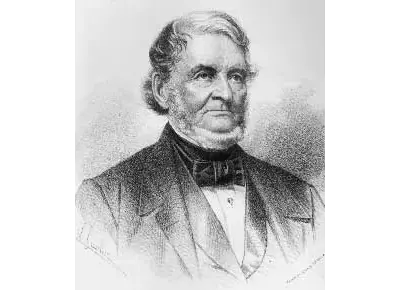
- Born: July 4, 1780
- Died: October 24, 1861
- Nationality:
- Profession: Lawyer, Soldier, Writer
William Hyslop Sumner was the son of Governor Increase Sumner. He graduated from Harvard College in 1799, and practiced law. He served as a general in the Massachusetts militia. Sumner wrote The History of East Boston and died in 1861.
