George Rockingham Gilmer Quotes
Treaties were expedients by which ignorant, intractable, and savage people were induced without bloodshed to yield up what civilized peoples had a right to possess.
George Rockingham Gilmer, 1790-1859, U.S. Congressman (Democrat, GA), Governor of Georgia, Quoted in Weinberg, Manifest Destiny, 1935
Sourced by: Eigen's Political and Historical Quotations


This is a particularly good historical quotation describing the state of the Native Americans and the different policies that had been adopted before and after the American Revolution. The President candidly admits there were unexpected consequences to American efforts after the Revolution and that some of the original objectives for the Indians had not been successful. He states some of the problems and notes the challenge ahead to resolve them equitably. After Adams was succeeded by Andrew Jackson, the new President and the forces he represented decided that the land and sovereignty over the land for America was more important than the other objectives which had not been successfully met very often. The age of rank discrimination and Indian removal began.

Published 100 years after it was written. This is the first known written statement of what became a de facto policy regarding the American Indian.


There had been no tradition of self government or even rights in Germany and some like Hamilton thought that the immigrants from such a totalitarian tradition would not handle the relative freedom of America. They were wrong.


Miller was the first Black American admitted to a Graduate Program—Johns Hopkins—in Mathematics


“Cleaned out” meant destroyed. He had been a strong advocate of peace with whites. See {610679} .

The Iroquois were among the most sophisticated of the North American Indian Tribes. They also were highly assimilated into the American society. In the next decades, they would switch their political position when New York State provided better legal guarantees for Iroquois land than the Federal Government. By the end of the 20th Century, led by the Iroquois, the Indian residents of New York State had the same level of earnings as the white man—and that was with NO INDIAN GAMING.

The century to which he was referring was the 19th century---1800-1899.


First Published American Indian Author


This was in the first article of their Constitution upon gaining their independence. With a long tradition of Dutch colonialism and a particularly brutal Japanese colonization during WWII, the Indonesians were most preoccupied with this issue.
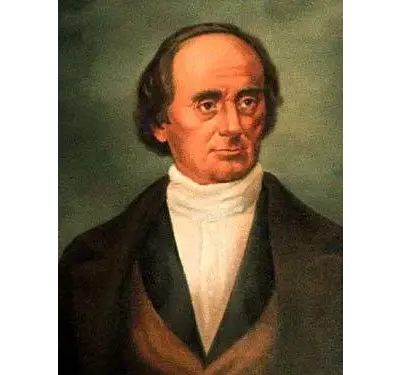
George Rockingham Gilmer was an American politician. He served two non-consecutive terms as the 34th Governor of Georgia, the first from 1829 to 1831 and the second from 1837 to 1839. He also served multiple terms in the United States House of Representatives.
