Theodore Roosevelt Quotes
To announce that there must be no criticism of the president... is morally treasonable to the American public.
Roosevelt, Theodore. Roosevelt in the Kansas City Star. Houghton Mifflin, 1921, p. 149.


In 1735 John Peter Zenger was charged with "publishing several seditious libels" against the English Governor of New York. He was arrested and tried:. The jury acquitted Zenger, striking one of the first American blows against government censorship. Hamilton, Zenger’s Defense Attorney. argued that although Zenger was clearly guilty of breaking the law, the law itself was unjust and dangerous. The jury unanimously acquitted Zenger. Today in England and in all states of America except Maryland, laws have been written preventing this kind of “jury nullification”.
This principle was incorporated into American law by the Supreme Court 1964 decision in Sullivan v. New York Times, where this argument drove the opinion.

He, in a speech to Parliament, had criticized the Iranian Judiciary on several counts, He was then reprimanded for doing so.


This had been a general, bipartisan principle from WWII through the Gulf War, but in the War on Terrorism, President George W. Bush and his administration deviated from the traditional American view and accused those who were criticizing their counter terrorism of aiding and abetting the enemy and attacked the loyalty and patriotism of their critics.
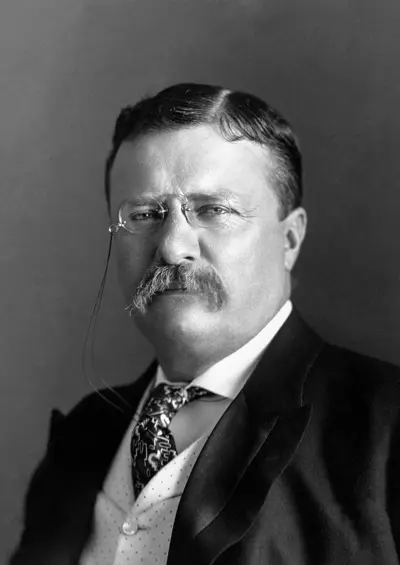
Theodore Roosevelt Jr., often referred to as Teddy or his initials T. R., was an American statesman, conservationist, naturalist, historian, and writer, who served as the 26th president of the United States from 1901 to 1909. He previously served as 33rd governor of New York from 1899 to 1900 and the 25th vice president of the United States from March to September 1901. Roosevelt emerged as a leader of the Republican Party and became a driving force for anti-trust and Progressive policies.
