Grover Cleveland Quotes
Those who are selected for a limited time to manage public affairs are still of the people, and may do much by their example to encourage, consistently with the dignity of their official functions, that plain way of life which among their fellow-citizens aids integrity and promotes thrift and prosperity.
Grover Cleveland, 1837-1908, 22nd & 24th President of the United States (Democrat, NY), Inaugural Address, March 4, 1885
Sourced by: Eigen's Political and Historical Quotations

See Charles James Fox, John Milton, Jeremy Bentham, George Mason, Henry Clay, Benjamin Disraeli and Woodrow Wilson for similar expressions of this idea.


This was an amazing statement for an all powerful Roman Emperor. Few national leaders—even in democracies would go this far. In early America, some Presidents had this attitude and saw themselves as servants of the Congress to a great extent. Over time, the power of the Congress diminshed and that of the Presidency grew, and no modern president considered himself the servant of the Congress.


At the time, the well-educated, elite class of Americans would rarely have anything to do with politics or public service towards the end of the 19th century. It was not part of the cultural expectation. Roosevelt was not only one of the rare exceptions, but he argued strongly to his Harvard and other Ivy League associates that they had a duty to become active. Few responded to his appeal but he set a precedent which over the years brought many talented men into politics and civil service.


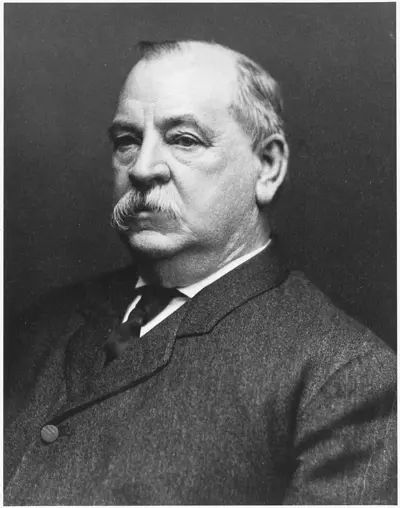
Stephen Grover Cleveland was an American politician and lawyer who served as the 22nd and 24th president of the United States from 1885 to 1889 and from 1893 to 1897. Cleveland is the only president in American history to serve two nonconsecutive terms in office. He won the popular vote for three presidential elections—in 1884, 1888, and 1892—and was one of two Democrats (followed by Woodrow Wilson in 1912) to be elected president during the era of Republican presidential domination dating from 1861 to 1933.
